
03 // Industry Use Cases
Dry Cleaning Benefits for Hotels
Hotels buy low-moisture CRB cleaning so guest rooms and corridors come back the same shift, wool and carpet edges stay drier, and one machine also covers tile.
At a glance
- Dry time
- ~40 minwith CRB Dry Compound
- Moisture method
- Low-moisture encapsulation / dry compound
- Recommended brush
- Soft GrayStandard Blue
- Ideal machine
- TM3 (12") rooms · TM4 (15") / TM5 (20") corridors
The 3-step process
- 1
Apply compound or encap pre-spray
A light, even application. No flooding, no soaked backing.
- 2
Counter-rotating cylindrical agitation
Two brushes turn against each other, lifting the pile and working chemistry in.
- 3
Lift soil & back in service
Vacuum the captured soil and reopen the space, often the same shift.
CRB vs. traditional wet extraction & rotary
| ✓ CRB low-moisture | Wet extraction / rotary | |
|---|---|---|
| Dry time | About 40 min or less with CRB dry compound | Soaked carpet can still be damp the next morning |
| Water in the floor | About 85–90% less water (CRB's comparison) | Floods the pile and backing |
| Wick-back & odor | Far less moisture left to wick back or sour | Moisture in the backing can wick, brown, or smell |
| Pile & surface | Cylindrical brushes lift and groom the pile | Rotary pads can distort pile; CRI 204 advises against rotary on carpet |
| Equipment | 40–62 lb, standard outlet, fits a closet or van | Truck access or portable extractor with hoses and tanks |
Keep a periodic hot-water extraction for heavy, oily, or salt-loaded soil. Dry time depends on humidity, airflow, and application rate.
Hotels benefit from dry carpet cleaning because a guest room has to be sold tonight, and a corridor cannot close until the carpet dries. Low-moisture cleaning with a counter-rotating brush (CRB) does the appearance work with a light encapsulator or an absorbent compound, so housekeeping can put the room back without waiting out a wet cushion.
The method is explained in What is dry cleaning and the carpet steps are in Dry cleaning for carpets. This page is the hotel case: where it helps, which machine fits which area, and what a chief engineer or housekeeping director should ask before buying.
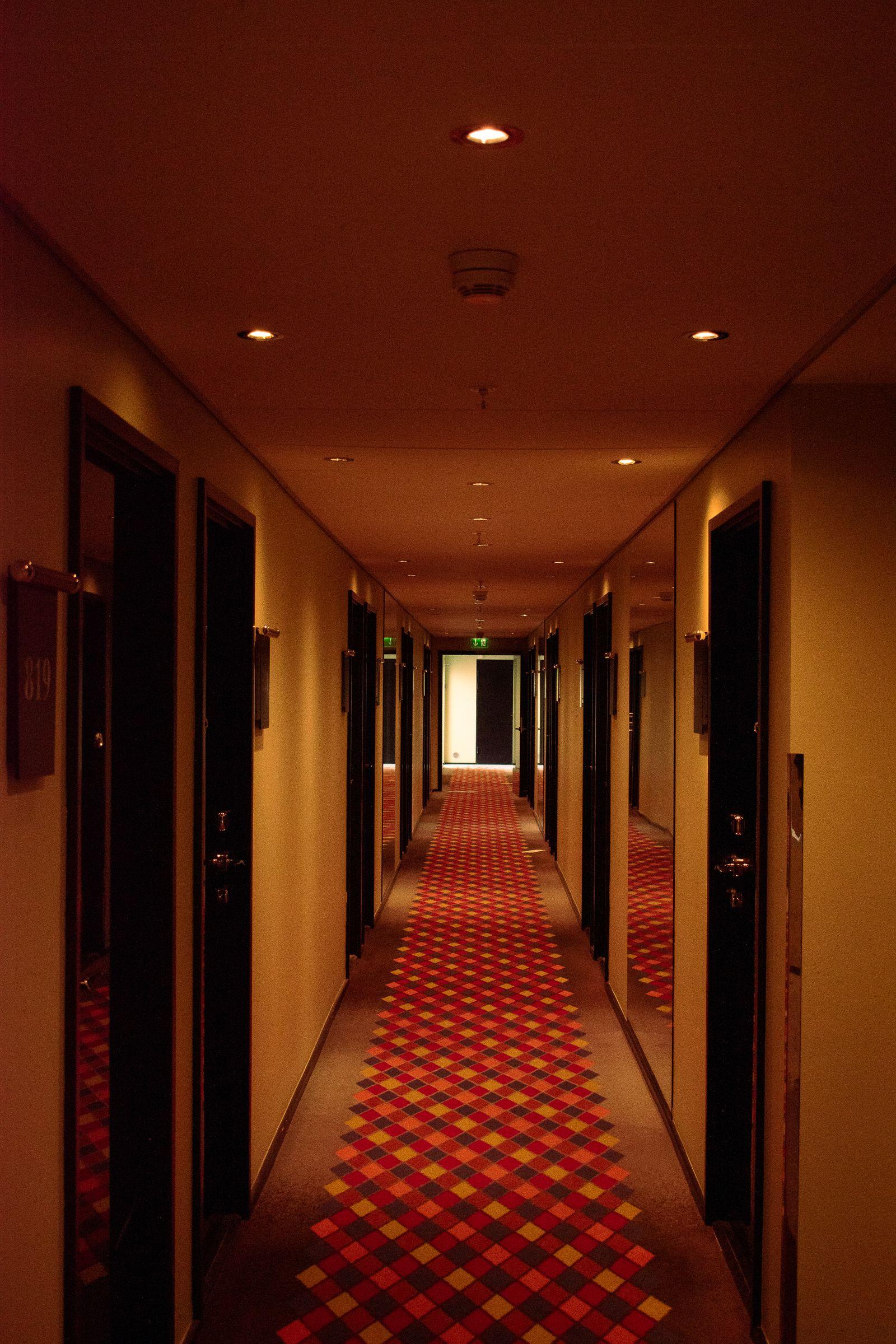
Guest-floor corridors stay open while they are cleaned. A long dry time is a longer stretch of wet-floor signs in front of occupied rooms. Photo: Ezequiel Filiberto, Pexels.
The problem wet cleaning creates in a hotel
Hot-water extraction is a legitimate deep clean. In a hotel it collides with the way the building makes money.
A guest room taken out for a wet carpet is a room you cannot sell, or a room you sell with an apology. Corridor carpet that is damp at check-in is a slip risk and a review. Wool and wool-blend corridors, still common in older and luxury properties, hold water and can smell if the cleaning was heavy. Stretch-in carpet over cushion, typical in guest rooms, is worse: water that reaches the pad does not leave when the face yarn feels dry. The odor shows up the next day, and the guest blames the room, not last month’s extraction.
Carpet next to tile, which is every bath foyer and many lobby edges, wicks water from a hard-floor rinse. The first twelve inches of carpet discolor. Engineers know that edge. It is one of the most reliable places a hotel carpet fails.
Low-moisture work is how you stop making those problems on the regular schedule. CRB states that its method uses about 85 to 90 percent less water than traditional wet cleaning. Use that as the manufacturer’s comparison. The hotel-specific claim you can check yourself is simpler: clean a test room, walk it on a timer, and see whether it can be sold that shift.
CRB’s organic dry compound is described by the company as dry in about 40 minutes or less. Encapsulation is the same short-dry family. Humidity, a closed room, and a heavy spray all slow it down. Test the worst room you have, not the empty one by the ice machine with the fan running.
What improves when the program changes
Rooms return the same shift. Vacuum, spot, encapsulate or compound, brush, and leave the follow-up vacuum on the housekeeping card once the floor is dry to the touch. The room is not blocked behind a “drying” sign into the arrival window.
Corridors can be done in sections while the floor is occupied. A 15- or 20-inch machine cleans a lane, the section dries, and the next section starts. You are not hosing a full guest floor and hoping the HVAC catches up before the first checkout surge.
Fewer odor complaints from the floor. Musty room complaints are often cushion or backing that stayed damp. A maintenance method that barely wets the face yarn stops adding water. If a room already smells, inspect the pad before you encapsulate over it. The CRB is not a dryer for a wet cushion.
Wool corridors keep their face. CRB recommends the gray soft brush for commercial wool and warns that a wool carpet which has never been dry cleaned can fuzz on the first pass. Do a closet test with the general manager in the hallway. That single test prevents a disaster and usually wins the rest of the building.
Lobby tile and room-corridor carpet stay on one work order. The blue brush maintains ceramic and porcelain. The green brush is for rougher grout. Change brushes and chemistry at the carpet line so you are not pushing grout slurry into the pile. The hard-floor process is in Dry cleaning for tiles.
The crew does not need a truck at the porte-cochère. Machines are 110/220 V, with listed motors of 500 W on the 12-inch and 750 W on the 15- and 20-inch. They ride a service elevator. There is no hose run through the lobby and no water-fill negotiation with engineering. In an older wing, keep the machine off a circuit that is already loaded.
Spills stop becoming stains. Beverage and food spills are the hotel’s daily soil. Ultra Pro beverage, enzyme, and general spotters exist for that. CRB states that the spotters meet DfE criteria. The video for the spotter line is here: Ultra Pro spotter. A same-day spot, followed by the scheduled CRB pass, is the difference between a lane and a permanent shadow.
Which machine belongs in which area
| Area | Machine | Why |
|---|---|---|
| Guest rooms, stairs, small suites | TM3 12-inch, about 40 lb | Fits between the bed and the dresser. Extra handle for stairs. |
| Typical guest-floor corridor, meeting rooms | TM4 15-inch, about 56 lb | The width CRB calls its usual commercial machine. |
| Lobbies, ballrooms, long straight corridors | TM5 20-inch, about 62 lb | Faster on open floor. Awkward in a standard guest room. |
| Convention halls and large prefunction space | Tandem 15- or 20-inch | Worth it when the room is empty and the path is long. |
| Solution applied as you walk | Manta Ray tank | 2-gallon onboard system in the 2026 brochure. Confirm it is included. |
A 200-room property that buys only a 20-inch machine will clean the ballroom and fight every guest room. A property that buys only a 12-inch will love the rooms and spend all night on the lobby. Most hotels that bring this in-house want the 12-inch and one wider machine. Contractors who serve several limited-service properties often start with the 15-inch and add the 12-inch when stairs and small rooms dominate the route.
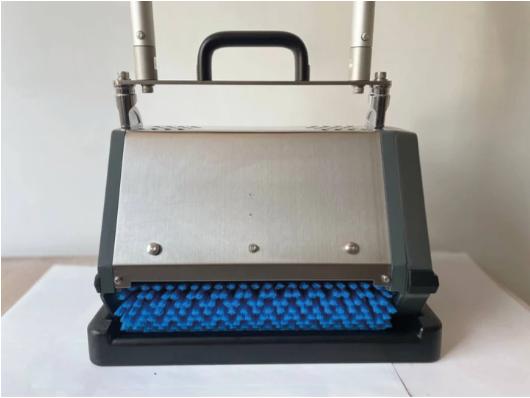
The 12-inch deck is the guest-room and stair machine. The handle on the housing is there so one person can carry it between floors.
Watch the sizes: TM3, TM4 15-inch, Manta Ray.
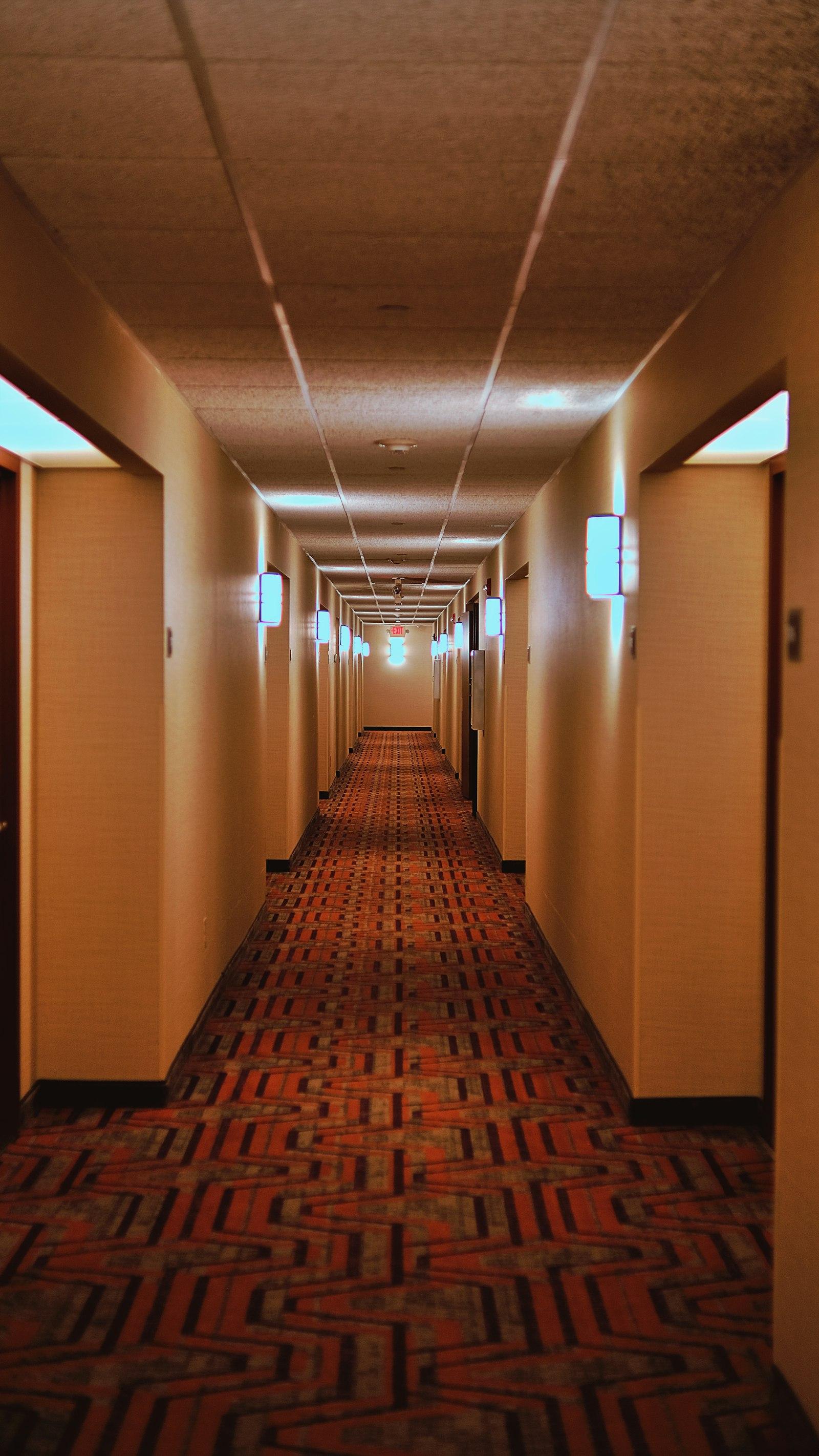
Patterned corridor carpet shows soil in the walking path. Clean the full width of the runner, or the clean strip becomes as obvious as the dirty one. Photo: Leiada Krözjhen, Unsplash.
Find your machine in 3 questions
Machine Selector
Find the right CRB machine in 3 questions
What kind of space do you clean most?
Pick the one that describes the majority of your route.
A hotel schedule that matches occupancy
Write it to the occupancy calendar, not to a generic “quarterly clean.”
- Every day: vacuum guest-floor corridors and the lobby path. Spot beverage and food spills on the shift they happen.
- On departure, for stays that need it: a 12-inch pass in the guest room with encapsulation at the medium-soil dilution (CRB’s published low-moisture range is 6–10 oz per gallon; heavy soil is 10–14). The label on the jug wins if it differs.
- Weekly or monthly, by traffic: compound or an extra encapsulating pass on the corridor lane, elevator lobbies, and the path from the restaurant to the toilets.
- A few times a year: hot-water extraction of entries, restaurant approaches, and any room whose carpet is loaded past what interim cleaning can even out. Salt, kitchen oil, and a carpet that has only been bonnet-cleaned for years belong in this visit.
Public space in the morning and guest rooms through the day is a normal split. Ask CRB for a noise figure before you schedule daytime work next to occupied rooms. That decibel number is not in the current spec sheets, and it matters more than a slogan about “quiet cleaning.”
Chemistry a hotel storeroom should actually stock
Stock what the soil is, in house sizes you will use before the shelf life runs out. Ultra Pro encapsulation is listed at about six months of shelf life.
- Encapsulation concentrate for the recurring carpet clean. CRB states it is CRI certified. Many mills ask for Seal of Approval products when a warranty is in play. Keep the product name on the housekeeping log.
- Organic dry compound for lanes that have to be dry quickly and for hard-floor touch-ups. CRB states DfE criteria.
- Beverage and enzyme spotters at the restaurants, bars, and room-service closets. A quart on a housekeeping cart prevents the “we’ll get it on the deep clean” delay that sets a stain.
- ECO Luster Shine or Guard if the property has luxury vinyl in new wings or suites. That is a vinyl process, not a grout process.
- Gray brushes for wool corridors, blue for commercial loop and routine tile, green only for real grout and rough floors. A yellow extra-stiff brush does not belong in a hotel closet unless a mill has approved a one-time restoration.
The peroxide concentrate is a skin and eye irritant as sold. Mixing stays in the housekeeping chemical room, with gloves, eye protection, and the SDS posted. Staff on the floor should handle labeled, diluted solution.
Find your brush in 2 questions
Step 1 of 2
In-house team or contractor
Both models work. The machine choice follows who carries the labor.
In-house housekeeping or engineering gains the most when guest-room carpet is cleaned at departure by people already in the room. Training is the whole risk. The sequence is short, and skipping the dry vacuum or leaving crystals unvacuumed is how a good method gets a bad name. CRB’s assembly and brush videos are the right first shift material: assembly, brush installation.
A contract cleaner gains a hotel account they can service without a truckmount permit, a water spigot, and a six-hour dry. Price the visit as a route: corridors this week, a block of rooms next week, extraction of the entries on the seasonal work order. The hotel should ask the contractor which brush is going on the wool, and should reject a rotary bonnet sold under the name “dry cleaning.” CRI 204 does not recommend rotary machines for carpet.
A useful contract sentence: “Interim low-moisture clean with a counter-rotating brush and CRI-certified encapsulation or CRB organic compound. Guest rooms releasable the same shift. Extraction of designated entries twice a year. Wool areas gray brush only, after a test patch.”
What a buyer should measure on the pilot
Do one guest floor and one public area before you buy a second machine or sign a year of chemical.
- Minutes to clean one typical king room, and one corridor bay between fire doors.
- Minutes until the carpet is dry to the touch, with the room’s normal HVAC.
- Whether a wool test patch fuzzes.
- Whether the bath-foyer carpet edge stays dry.
- How the grout in one restroom looks the next morning, after recovery, in daylight.
- Any slip or odor comment from the front desk that week.
Those six notes are worth more than a brochure. They are also how you justify the purchase to an owner group: rooms back on the board, fewer floor complaints, one system for carpet and tile.
When a hotel should not switch everything at once
Keep extraction in the program for restaurant approaches, winter entries, and any carpet that is already dark after a competent interim clean. Switching those areas to encapsulation only will disappoint the general manager in a month.
Do not use this method as a substitute for water-damage restoration. A flooded room, a chronic leak under a window wall, or a urine-saturated cushion is an IICRC-style drying and restoration problem. Clean the face yarn after the structure is dry.
Do not put a green brush on a wool runner because it “cleans better.” It will. It will also shred the face.
And do not buy the widest tandem for a historic inn with 12-foot corridors and furniture that never moves. Buy the 12-inch, prove the chemistry, and add width only where the floor is open.
Related reading
- What is dry cleaning
- Dry cleaning for carpets
- Dry cleaning for tiles
- Benefits for offices
- Machines
- Chemicals
- Brushes
- YouTube channel
FAQ
Will guest rooms be ready the same day?
That is the reason hotels choose this method. Compound, as CRB describes it, is about 40 minutes or less to dry. Confirm it in one of your own rooms with the door closed and the fan in its normal state. A heavy application in humid weather takes longer.
Is it safe for wool corridor carpet?
Use the gray soft brush, test a hidden area, and use the encapsulation dilution on the label. CRB warns that a first dry cleaning on wool that has never been cleaned this way can raise fuzz. Peroxide can affect some dyes. The test patch is the decision.
Can the night crew run it without a specialist?
Yes, after they have been shown the sequence: vacuum, spot, light chemistry, brush, later vacuum. The assembly video and brush video are the training start. Mixing concentrate stays with a supervisor.
Do we still need a steam-clean vendor?
For entries, oily restaurant approaches, and a periodic reset, yes. The CRB reduces how often you need that vendor and removes them from the guest-room rotation.
What should we buy first?
A TM3 for guest rooms and a TM4 or TM5 for public space, plus gray and blue brushes, encapsulation, compound, and the two spotters your outlets actually spill. Call with the room count and the fiber, and CRB will sanity-check that list.
Talk with CRB
Hotel and motel work is one of the segments CRB already supplies. For a pilot kit matched to guest rooms and corridors, call 1-800-704-0527 or email info@crbclean.com.
Interactive configuration tools // size the system for this facility
Next step
Run the trial on your own floor
A CRB representative can demonstrate on your worst room or aisle, then price the machines, brushes, and chemistry for every site.