
02 // Surface Applications
Dry Cleaning for Tiles and Grout
Tile and grout stay cleaner when a counter-rotating brush works solution into the joint and the floor is not left soaking. Here is the maintenance method, and its limits.
At a glance
- Dry time
- ~40 minwith CRB Dry Compound
- Moisture method
- Low-moisture, controlled solution
- Recommended brush
- Ultra Soft BrownStandard BlueStiff Green
- Ideal machine
- TM3 (12") / TM4 (15") / TM5 (20")
The 3-step process
- 1
Apply compound or encap pre-spray
A light, even application. No flooding, no soaked backing.
- 2
Counter-rotating cylindrical agitation
Two brushes turn against each other, lifting the pile and working chemistry in.
- 3
Lift soil & back in service
Vacuum the captured soil and reopen the space, often the same shift.
CRB vs. traditional wet extraction & rotary
| ✓ CRB low-moisture | Wet extraction / rotary | |
|---|---|---|
| Dry time | About 40 min or less with CRB dry compound | Soaked carpet can still be damp the next morning |
| Water in the floor | About 85–90% less water (CRB's comparison) | Floods the pile and backing |
| Wick-back & odor | Far less moisture left to wick back or sour | Moisture in the backing can wick, brown, or smell |
| Pile & surface | Cylindrical brushes lift and groom the pile | Rotary pads can distort pile; CRI 204 advises against rotary on carpet |
| Equipment | 40–62 lb, standard outlet, fits a closet or van | Truck access or portable extractor with hoses and tanks |
Keep a periodic hot-water extraction for heavy, oily, or salt-loaded soil. Dry time depends on humidity, airflow, and application rate.
Dry cleaning for tile means low-moisture agitation. A counter-rotating brush (CRB) works a small amount of cleaner into the grout joint and across the tile face, then the soil is recovered. The floor is not flooded, and it can go back into service without a long wait for standing water to disappear.
Ceramic and porcelain tile are easy to wipe and hard to get clean in the joint. Soil, grease, and fine grit sit down in the grout, where a flat mop slides over the top. The brush has to reach that groove. That is the job CRB machines are built to add to a hard-floor program, alongside the carpet work described in Dry cleaning for carpets.
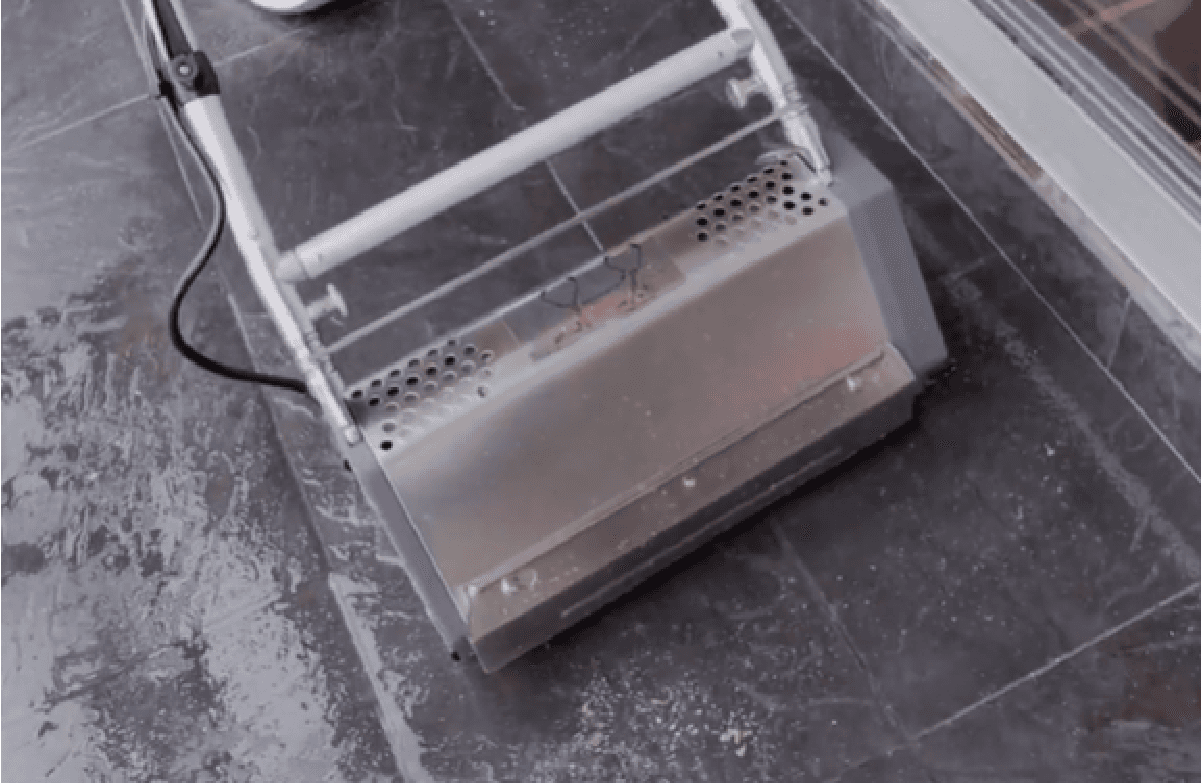
A CRB deck on dark tile. The brushes reach the grout line that a flat mop misses. See the same kind of work on film: Hard floor cleaning.
Why grout is the real surface
The tile face is dense. Soil on it is mostly a film. Grout, especially cement-based grout, is a ridge full of small voids. Every shoe deposits a little grit into those voids. In a kitchen, a restroom, a hotel bath corridor, or a lobby that meets a wet entrance, the joint darkens first. By the time the tile looks dirty, the grout has been holding soil for months.
A rotary machine with a soft pad rides on the high spots. A mop spreads the soil along the joint and leaves a film. A cylindrical brush that turns into the groove agitates the length of the line. CRB describes this as lifting soil from the joint, and recommends the machine for ceramic and porcelain, including restaurant and commercial floors where grease and embedded soil are normal.
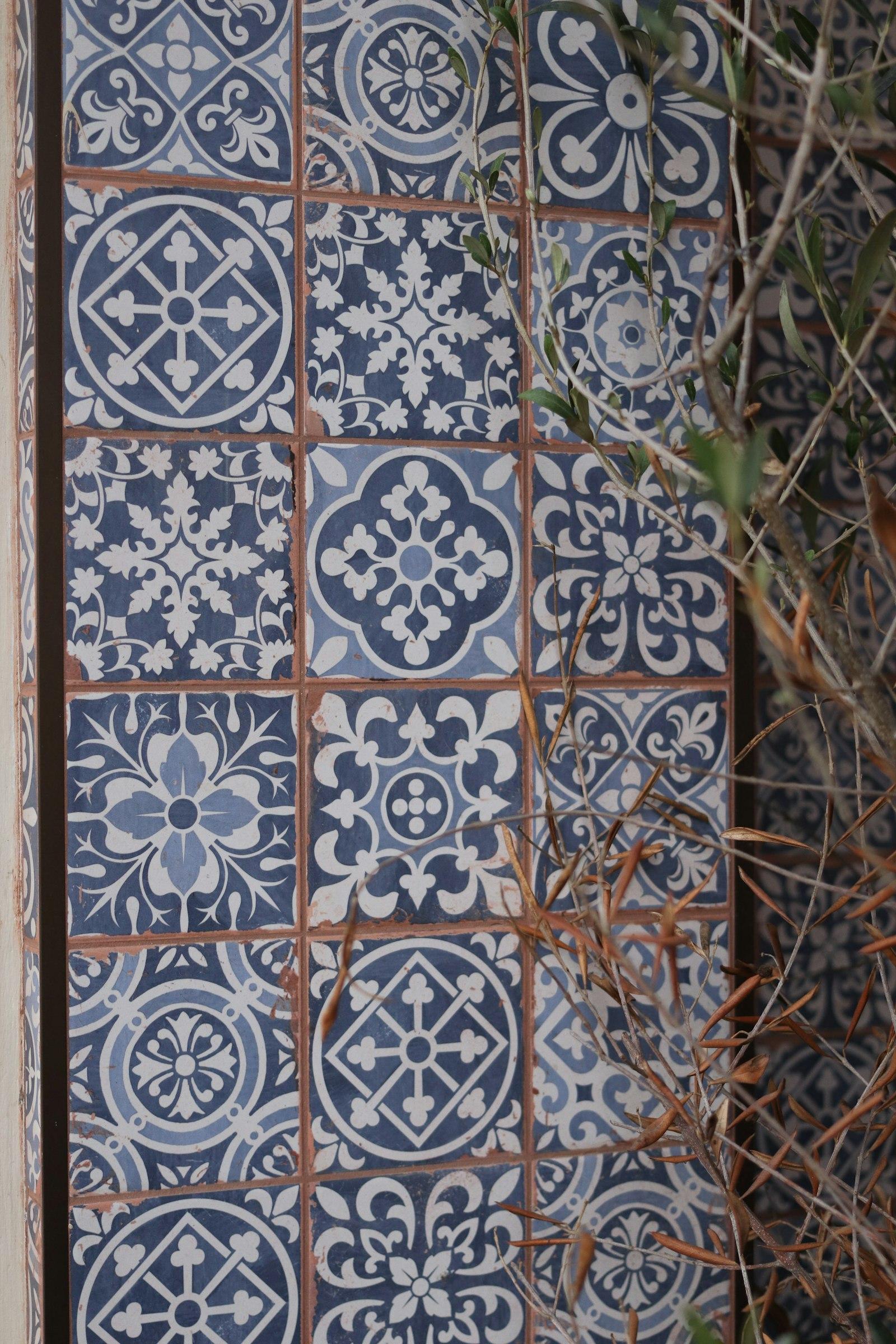
Grout is a grid, not a thin line. Every joint is a place for soil to sit. Photo: Tanya Barrow, Unsplash.
What “low moisture” means on a hard floor
Tile does not absorb water the way carpet pile does. The risk is different. Water runs into the joint, under unsealed edges, into adjacent carpet, and across the floor as a slip film. A soaking wet tile floor in a hotel lobby at 7 a.m. is a safety problem and a complaint.
Low-moisture cleaning still uses a cleaning solution. It uses enough to wet the soil and let the brush work, and little enough that recovery is quick. You should see a damp joint, not a sheet of water moving ahead of the machine. While the floor is damp, treat it as wet: signs, footwear, and no one cutting through the area.
CRB’s comparison of about 85 to 90 percent less water is the company’s figure against traditional wet cleaning. On tile, the operational gain is less runoff into carpet edges and a shorter time before the floor is simply damp, then dry.
The maintenance sequence
1. Take up the loose soil
Dust-mop or vacuum the floor first. Grit left under the brush becomes sandpaper. On a lobby that meets the street, this step matters as much as the chemical.
2. Choose a chemistry made for that floor
Three CRB products get confused here. They are not interchangeable.
- Ultra Pro Organic Dry Compound is the CRB product described for hard floors as well as carpet. It is an absorbent compound. CRB states that it meets DfE criteria, has a citrus scent, darkens as it loads soil, and has a dry time of about 40 minutes or less. On tile it is a low-moisture way to hold grit and light soil so vacuuming can remove it. Video of a CRB with compound on a hard floor: TM5 on hard floor with compound.
- A tile-and-grout cleaner labeled for ceramic or porcelain is the right partner when the joint is oily or filmed and you need a detergent in the groove. Apply it lightly, agitate with the CRB, and recover it. CRB’s machine is the agitation step in that sequence. Use the cleaner the tile and grout manufacturers allow. Strong acids sold to “whiten” grout can etch cement grout and damage stone. They are not part of this maintenance method.
- ECO Luster Shine and ECO Luster Guard are for luxury vinyl tile. They are cleaners and, in the Guard’s case, a protector for LVT. They are not grout restorers, and they should not be brushed into a cement joint as if they were.
Ultra Pro peroxide encapsulation is a carpet interim cleaner. Keep it on carpet unless the label in your hand says otherwise. Mixing a carpet polymer into porous grout is how a floor gets a sticky film that holds the next day’s soil.
3. Brush with the stiffness the soil requires
CRB’s brush chart splits tile work in two.
Blue standard is the routine brush: regular tile and grout maintenance, moderately soiled ceramic and porcelain, commercial spaces, and grease that has not become a restoration project. It is also the everyday commercial carpet brush, which is why one machine can move from a corridor carpet to a tile lobby if you change brushes and chemistry.
Green stiff is for rougher, more rigid surfaces and for tile and grout that need more bite. Use it when the blue brush is only polishing the top of the soil. It is the wrong brush for wool, plush carpet, and vinyl that scuffs.
Change brushes when you change floors. A green brush that just scrubbed sandy grout should not be dropped onto a wool guest-room carpet. Rinse the brush, or keep a dedicated hard-floor pair.
Brush changes are shown here: How to install the brushes.
4. Recover the soil
On a light maintenance clean with compound, vacuum the spent material once it has taken up soil. On a detergent clean, recover the slurry with a mop, a wet vacuum, or the building’s usual hard-floor recovery tool. Leaving a detergent film in the joint is the main way a “clean” grout looks dirty again in a week.
Rinse with clear water only as far as you need to remove that film. A maintenance visit should not end with a flooded floor. A restoration visit on black, greasy, porous grout often does include a dedicated rinse or an extractor. The CRB still earns its place as the machine that agitated the joint before that rinse. It is not a promise that every failed grout line will come back to the original color with brushes alone.
Find your brush in 2 questions
Step 1 of 2
What this method does well
- Lobby and corridor tile that meets carpet. You can clean the tile without pushing a wave of water under the carpet edge.
- Restrooms and bath corridors where grout shadows and the room has to reopen. Agitation plus recovery beats a mop that redistributes the same soil.
- Restaurants and back-of-house ceramic, for the grease film CRB names as a target of the blue brush. Heavy carbonized grease may still need a stronger kitchen degreaser and a rinse. Do that on a schedule the health inspector and the tile maker both allow.
- Porcelain that looks clean and grout that does not. The face was never the problem.
- One machine for mixed buildings. Hotels and offices are rarely all carpet. A CRB with a blue or green brush set covers the hard floor on the same contract as the carpet. The hotel case is in Dry cleaning benefits for hotels. The office case is in Dry cleaning benefits for offices.
What it will not do
Be straight with the customer. These are the usual disappointments, and they are predictable.
- Missing or crumbled grout needs repair, then cleaning. Brushing a void only makes dust.
- Etched cement grout or a bleached color will not return to a uniform shade because it was agitated. Color loss is damage, not dirt.
- Natural stone (marble, limestone, travertine) can scratch or etch with the wrong brush and the wrong pH. Confirm the stone and the sealer before you use a green brush or any acidic product. The peroxide encapsulator’s concentrate is around pH 4 to 5, which is a reason to keep that carpet product off calcareous stone.
- A soaked substrate. If water is already under the tile, cleaning the face will not dry the mortar bed. Find the leak.
- A single pass over years of kitchen polymer. Budget a restoration: the right degreaser, CRB agitation, recovery, and a rinse. Then put this low-moisture visit on a calendar so you are not restoring it again next quarter.
Machine size on hard floors
Open lobbies and ballroom prefunction tile favor the TM5 20-inch, because the path is wide and unobstructed. A tandem pair is for very large open floors where one operator can walk long runs.
Restrooms, retail aisles, and the tile between guest-room doors favor the TM4 15-inch or the TM3 12-inch. The 12-inch is about 40 lb and is the machine CRB points at tight spaces. Turning a 20-inch deck in a single restroom costs the time you saved on the straight corridor.
The Manta Ray tank, a 2-gallon onboard system in the 2026 brochure, can feed foam or liquid while you brush, which helps an operator keep the application even on a long tile run. Confirm that the machine you order includes it. Overview: Manta Ray.
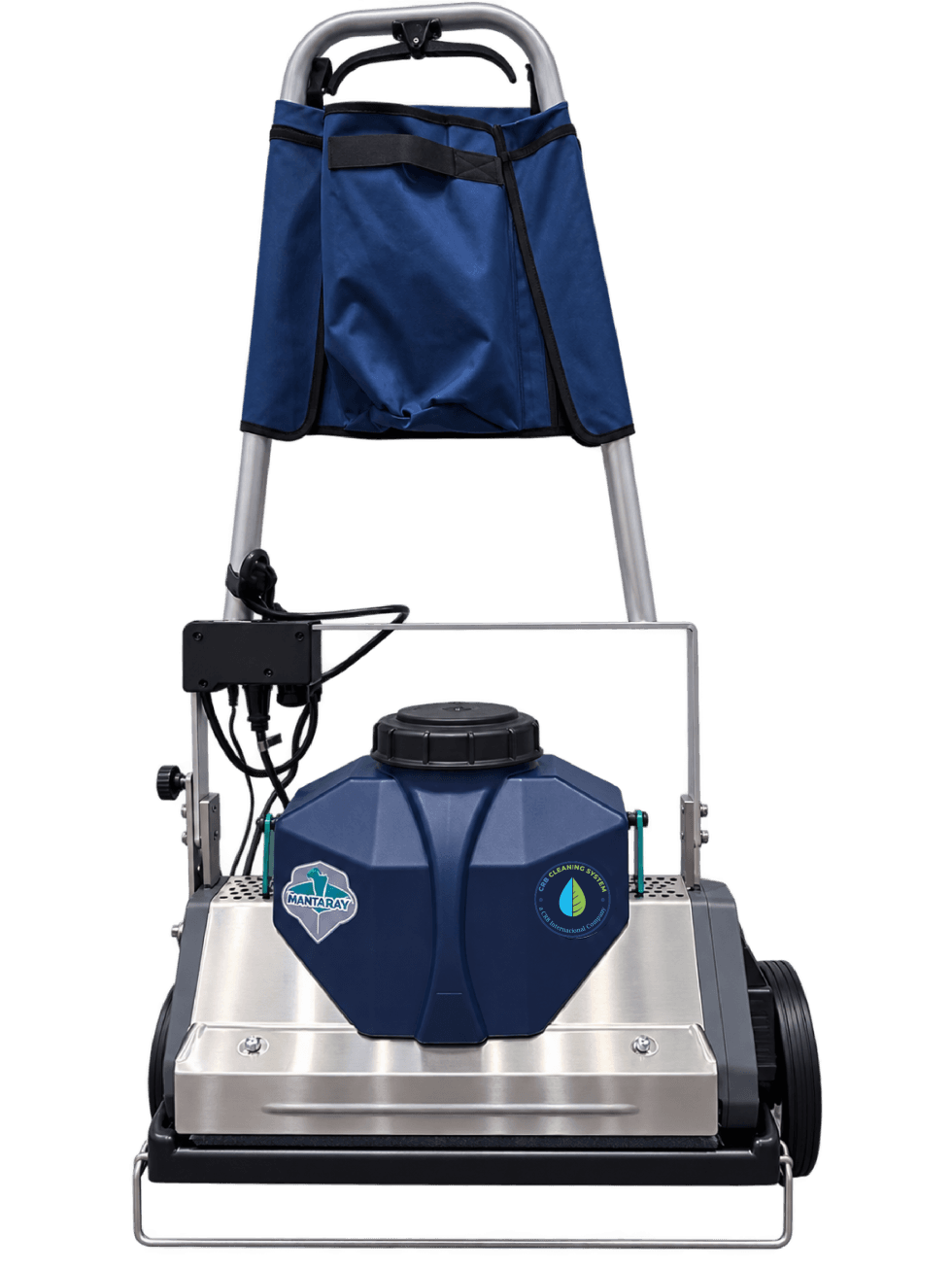
Onboard solution keeps the wet edge at the brush. On tile, that control is what keeps the clean from becoming a flood.
Find your machine in 3 questions
Machine Selector
Find the right CRB machine in 3 questions
What kind of space do you clean most?
Pick the one that describes the majority of your route.
Luxury vinyl is a separate floor
LVT and LVP are everywhere in new hotels and offices. They scratch, and they haze if the wrong disinfectant or solvent is left on them. Clean them with a product made for vinyl. CRB sells ECO Luster Shine as an LVT cleaner and ECO Luster Guard as a cleaner and protector. Follow those labels. Use a brush that will not imprint the wear layer. The green grout brush is a poor default on a new vinyl plank floor.
If the “tile” in the specification is vinyl, stop and read the product page before you mix a grout cleaner.
How to write it into a cleaning contract
Name the floor, the brush, and the recovery. “Dry clean the tile” on a bid sheet means something different to every bidder.
A clear line:
“Monthly low-moisture clean of ceramic lobby tile: dust-mop, light application of the approved tile cleaner or CRB organic compound, agitate with a CRB and the blue brush, recover soil, no standing water at handoff. Green brush only on the kitchen quarry tile. LVT in the lounge cleaned with ECO Luster, separate brush.”
That scope is something a hotel engineer can inspect. It also tells your tech when the visit has turned into a restoration that needs a change order.
When to buy the machine for tile work
Buy it if the building, or the route, has both carpet and hard floors. One CRB, two brush sets, and the right chemistry replace a rotary for the agitation step and give you a carpet method the same day. The cost makes sense when grout complaints and carpet downtime are both on the same work order.
Buy it for tile alone if the floors are large enough that hand scrubbing grout is the labor line you want to remove, and if you are willing to recover solution properly. A brush with no recovery plan will not beat a well-run auto-scrubber on a wide, smooth porcelain field. The CRB’s advantage on that field is the joint, the edges, and the mixed carpet-and-tile buildings where an auto-scrubber is the wrong tool next to the carpet.
Skip the promise of “grout looks new” until someone has cleaned a test bay and looked at it dry, in daylight. Sell the test. It is the fastest way to close an honest job and to avoid the one that needed regrouting.
Related reading
- What is dry cleaning
- Dry cleaning for carpets
- Benefits for hotels
- Benefits for offices
- Tile and grout on the CRB site
- Machines
- Brushes
- Chemicals
FAQ
Can a CRB replace a pressure rinse on black grout?
On a maintenance schedule, agitation and recovery keep grout from getting to that point. On grout that is already deep-stained or grease-loaded, plan a restoration with the right chemical, the CRB as the agitator, and a real rinse or extraction. Then maintain it with the low-moisture visit.
Which brush comes with the machine?
CRB ships a standard blue brush, the most balanced of the set. Add a green pair if tile and grout are a regular part of the work.
Will low-moisture cleaning stop slips?
A floor with less standing water is safer to hand back than a rinsed, soaking lobby. Any damp floor still needs wet-floor practice until it is dry. The method reduces water. It does not repeal friction laws while the film is wet.
Can I use the carpet encapsulator on the grout?
Keep Ultra Pro encapsulation on carpet unless the label you are holding extends the use. Grout wants a hard-floor product: CRB’s organic compound where that method fits, or a tile cleaner approved for the surface, recovered after agitation.
Does the same machine do the carpet in the next room?
Yes, after a brush and chemistry change. That two-surface route is the usual reason a hotel or office buys the system.
Talk with CRB
Describe the floor: ceramic, porcelain, stone, or LVT, and whether the grout is dirty or damaged. Call 1-800-704-0527 or email info@crbclean.com. Specs for the 12-, 15-, and 20-inch machines are on the machines page.
Interactive configuration tools // apply this guide to your floor