
03 // Industry Use Cases
Commercial Pet Stains, Odor & Embedded Hair: A Low-Moisture CRB Program
Pet urine comes back when a wet clean drives it deeper. Find it with UV light, lift the hair and the pile with a counter-rotating brush, and treat the spot without soaking the backing.
At a glance
- Dry time
- ~40 minwith CRB Dry Compound
- Moisture method
- UV inspection + enzyme spotter + low-moisture encapsulation / dry compound
- Recommended brush
- Soft GrayStandard Blue
- Ideal machine
- TM3 (12") rooms · TM4 (15") / TM5 (20") corridors
The 3-step process
- 1
Apply compound or encap pre-spray
A light, even application. No flooding, no soaked backing.
- 2
Counter-rotating cylindrical agitation
Two brushes turn against each other, lifting the pile and working chemistry in.
- 3
Lift soil & back in service
Vacuum the captured soil and reopen the space, often the same shift.
CRB vs. traditional wet extraction & rotary
| ✓ CRB low-moisture | Wet extraction / rotary | |
|---|---|---|
| Dry time | About 40 min or less with CRB dry compound | Soaked carpet can still be damp the next morning |
| Water in the floor | About 85–90% less water (CRB's comparison) | Floods the pile and backing |
| Wick-back & odor | Far less moisture left to wick back or sour | Moisture in the backing can wick, brown, or smell |
| Pile & surface | Cylindrical brushes lift and groom the pile | Rotary pads can distort pile; CRI 204 advises against rotary on carpet |
| Equipment | 40–62 lb, standard outlet, fits a closet or van | Truck access or portable extractor with hoses and tanks |
Keep a periodic hot-water extraction for heavy, oily, or salt-loaded soil. Dry time depends on humidity, airflow, and application rate.
Pet-friendly hotels, apartment communities, senior living, and the cleaning companies that serve them all fight the same three problems: urine spots, the odor that comes with them, and hair packed into the pile. A low-moisture program with a counter-rotating brush (CRB) handles them in order. Find the spots with UV light, lift the hair and open the pile with the brush, then treat and clean with a small amount of chemistry instead of a flood of water.
This page is the pet case: why the problem keeps coming back, the CRB sequence, where the method stops, and how to measure the return. The low-moisture method itself is in What is dry cleaning.
The facility challenge
The spot you can't see is the one that smells
Dried urine is often invisible in room lighting, especially on patterned hotel and apartment carpet. Housekeeping cleans the stain they can see and misses the three next to the bed or behind the sofa. The odor complaint arrives with the next guest or resident.
Wet cleaning can bring the stain back
Hot-water extraction puts a lot of water into the carpet. On a urine spot, that water can carry the residue down into the backing and the cushion. As the carpet dries from the bottom up, moisture wicks back toward the face yarn and brings dissolved residue with it. The yellow or brown ring reappears a day or two after the carpet looked clean. In a pet-friendly room on a tight turnover, that is a second visit and a second complaint.
Hair packs into the pile
Pet hair works down into cut pile and around the base of loop carpet. A standard upright vacuum lifts what is on top. What is wound into the pile stays, holds dander and soil, and makes the carpet look matted and grey in the walking lanes.
The room still has to turn
A pet-friendly hotel room, a vacated apartment, or a senior-living suite has a schedule. A carpet that is wet into the evening is a room that can't be sold, a unit that can't be shown, or a resident who can't move back in.
Before & after // process comparison
What happens under the carpet
A // Hot-water extraction
B // CRB low-moisture + pile lift
Diagram, not to scale. Water use per CRB: about 85–90% less than traditional wet cleaning.
The CRB system solution
1. UV inspection first
Before any chemistry goes down, darken the room and sweep CRB's UV inspection flashlight across the carpet. Many urine and other organic stains show under UV light that are hard to see otherwise. Check the bed line, along walls and doors, around furniture legs, under desks, and the corners pets favor. Mark each spot with painter's tape or a note on the room card.
Inspection turns "the room smells" into a list of spots. It also tells you which rooms need more than a routine clean.
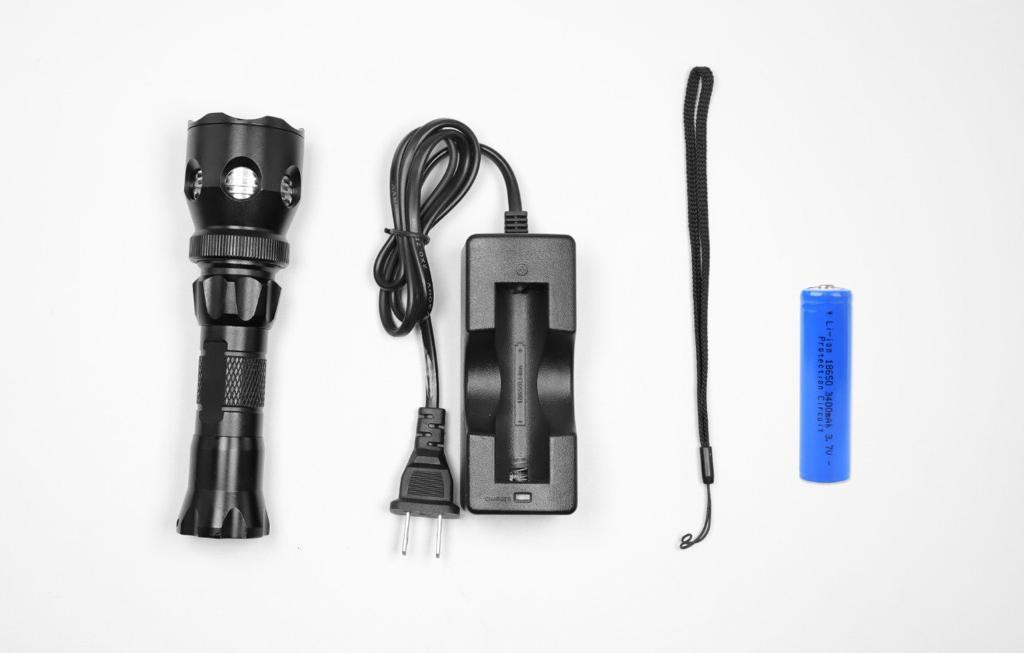
The kit used for step 1: the UV flashlight, a rechargeable 18650 lithium battery, the charger, and a wrist strap, with a carrying pocket and storage box. CRB states about 30 hours of use on a full charge.
2. Lift the hair and open the pile
Vacuum first with a good commercial vacuum. Then make a dry pass with the CRB. The two cylindrical brushes turn against each other, comb the yarn, and stand the pile up. Hair wound into the pile is pulled toward the surface, where the follow-up vacuum can collect it. Brush choice follows the carpet: gray soft for cut pile and wool, blue for commercial loop. Brush pairing is in Dry cleaning for carpets.
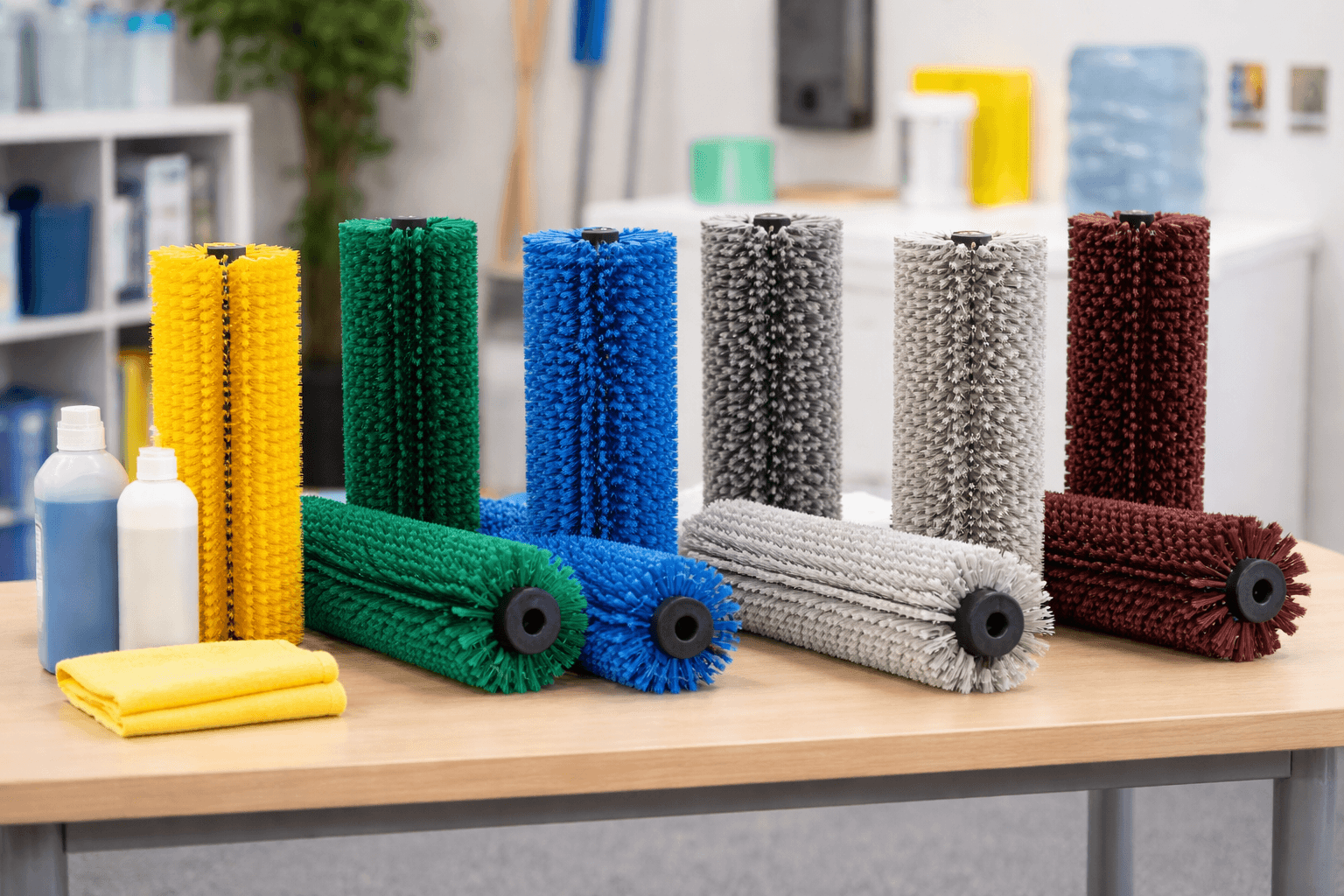
CRB brushes come in several bristle grades. The color sets the carpet it is meant for, so a pet route on mixed carpet usually carries two.
Hair winds around the brushes as well as the carpet. Clear the brushes between rooms on a heavy-hair route. The brush care routine is in the owner quick-start.
3. Treat the spots, then clean the floor
- Spot treatment. Apply CRB's Ultra Pro enzyme spotter to each marked spot and give it the dwell time on the label. CRB states that its spotters meet EPA Design for the Environment (DfE) criteria. Blot. Do not soak the spot.
- Encapsulation. Spray Ultra Pro peroxide encapsulation pre-spray lightly over the room at the label dilution and brush it through with the CRB. CRB states it is CRI certified and hydrogen-peroxide based. As it dries, it surrounds soil in crystals that the next vacuuming removes. The concentrate is a skin and eye irritant as sold. Mix it in the chemical room, with gloves and eye protection, and keep the SDS posted.
- Dry compound where speed matters. On lanes and rooms that have to return fastest, use Ultra Pro Organic Dry Compound instead. It is brushed in, absorbs soil, and is vacuumed out. CRB states a dry time of about 40 minutes or less. Humidity and a closed room slow it down.
- Vacuum once the carpet is dry to the touch, to remove crystals, compound, and the hair the brush brought up.
Because the method uses a small fraction of the water of extraction (CRB describes it as about 85 to 90 percent less), it does not push new water into the backing. That is what keeps a cleaned spot from wicking back on its own.
Where the method stops
Low-moisture cleaning works on the face yarn. It does not reach urine that has already soaked through the backing into the cushion or the subfloor. If a spot comes back after a correct low-moisture clean, or the odor is strong with the face yarn dry, the contamination is below the carpet. That spot needs subsurface treatment from a restoration specialist, or the cushion and carpet section replaced. The CRB is not a dryer for a wet cushion, and no surface method fixes a saturated pad.
Recheck treated spots with the UV light at the next turnover. A spot that fades is on the surface. A spot that returns is in the pad.
Find your brush in 2 questions
Step 1 of 2
Which machine goes where
| Area | Machine | Why |
|---|---|---|
| Pet-friendly hotel rooms, apartments, senior-living suites | TM3 12-inch, about 40 lb | Fits between bed and dresser and around furniture. One person carries it between floors. |
| Corridors, common rooms, leasing offices | TM4 15-inch, about 56 lb | CRB's usual commercial width. |
| Long corridors and open amenity spaces | TM5 20-inch, about 62 lb | Fewer passes on open runs. |
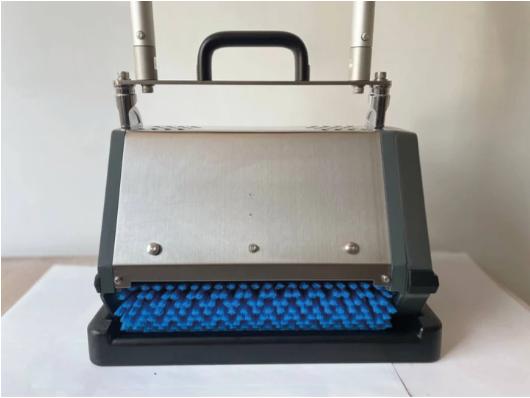
The TM3 12-inch, the room machine on a pet route. Clear wound hair off the brushes between rooms.
Find your machine in 3 questions
Machine Selector
Find the right CRB machine in 3 questions
What kind of space do you clean most?
Pick the one that describes the majority of your route.
Operational ROI
Measure it on your own rooms for one month.
- Repeat visits. Count spots or rooms that needed a second clean because a stain wicked back. That number is the clearest test of the method change.
- Odor complaints per 1,000 occupied pet-room nights, or per apartment turnover, before and after UV inspection becomes part of the routine.
- Room or unit hold time. Minutes from start of the carpet pass to release, compared with your current method and its drying wait. In a hotel, multiply rooms no longer held by the average daily rate. In multifamily, multiply days saved per turnover by the daily rent.
- Pet fee and deposit disputes. UV inspection with photos at check-out gives the property a record of what was there, and what was not.
What to ask before buying
- Which carpets are cut pile, which are loop, and which are wool? Each one sets the brush.
- What dwell time does the enzyme spotter need, and how many rooms can the crew treat in that window?
- Who carries the UV flashlight, and what happens when it finds a spot that keeps coming back?
- What is the replacement plan for a pad that is already contaminated?
Related reading
Interactive configuration tools // size the system for this facility
Next step
Run the trial on your own floor
A CRB representative can demonstrate on your worst room or aisle, then price the machines, brushes, and chemistry for every site.