
03 // Industry Use Cases
Hotel Guest-Room Turnover: Pet-Friendly Rooms, the Bed Zone, and UV Spot Detection
The room between check-out and check-in is where housekeeping wins or loses a review. Here is a low-moisture routine for the carpet, UV spot detection for pet-friendly rooms, and a quick check of the bed.
At a glance
- Dry time
- ~40 minwith CRB Dry Compound
- Moisture method
- Low-moisture encapsulation / dry compound + UV inspection
- Recommended brush
- Soft GrayStandard Blue
- Ideal machine
- TM3 (12") guest rooms
The 3-step process
- 1
Apply compound or encap pre-spray
A light, even application. No flooding, no soaked backing.
- 2
Counter-rotating cylindrical agitation
Two brushes turn against each other, lifting the pile and working chemistry in.
- 3
Lift soil & back in service
Vacuum the captured soil and reopen the space, often the same shift.
CRB vs. traditional wet extraction & rotary
| ✓ CRB low-moisture | Wet extraction / rotary | |
|---|---|---|
| Dry time | About 40 min or less with CRB dry compound | Soaked carpet can still be damp the next morning |
| Water in the floor | About 85–90% less water (CRB's comparison) | Floods the pile and backing |
| Wick-back & odor | Far less moisture left to wick back or sour | Moisture in the backing can wick, brown, or smell |
| Pile & surface | Cylindrical brushes lift and groom the pile | Rotary pads can distort pile; CRI 204 advises against rotary on carpet |
| Equipment | 40–62 lb, standard outlet, fits a closet or van | Truck access or portable extractor with hoses and tanks |
Keep a periodic hot-water extraction for heavy, oily, or salt-loaded soil. Dry time depends on humidity, airflow, and application rate.
A guest room has a few hours between check-out and the next arrival. Housekeeping has to strip, clean, inspect, and release it in that window. Low-moisture carpet cleaning with a counter-rotating brush (CRB) fits inside the turnover because the carpet is dry enough to walk on before the room is sold again. A UV inspection flashlight finds the pet spots and other organic stains that room lighting hides, around the bed, the furniture, and the bed itself.
The hotel program as a whole, from corridors to lobby tile, is in Dry cleaning benefits for hotels. This page is narrower: the guest room on a departure day, and the zone around the bed, where most complaints start.
The facility challenge
The room has to be sold tonight
A room held back for a damp carpet is revenue lost, or a room sold with an apology. Hot-water extraction leaves water in the cushion under stretch-in carpet, and that water outlasts the face yarn by hours. The odor shows up after the next guest has checked in.
The bed zone collects the soil
The strip of carpet along each side of the bed, the path from the bed to the bathroom, and the carpet under the bed skirt line take the room's spills and dust: room-service trays, coffee, wine, and whatever rolls under the frame. That is also the carpet a guest sees from the pillow.
Pet-friendly rooms hide their spots
A room that allows dogs and cats can look clean and still smell. Urine spots dry nearly invisible on patterned carpet, usually along the bed, beside the sofa or desk, and near the door. Housekeeping cleans what it can see. The next guest, often one without a pet, finds the rest. The full pet program, including embedded hair, is in Commercial pet stains, odor and embedded hair.
The bed is the complaint
Guests judge a room by the bed. A stain on a mattress or box spring found by a guest becomes a photo in a review. Housekeeping needs a way to check the bed quickly on every turn, not only on the deep-clean rotation.
The CRB system solution
Carpet: the departure-day pass
- Strip and vacuum. Pull the bed out where the frame allows, and vacuum along and under the bed line.
- Find the spots (pet-friendly rooms). Darken the room and sweep the UV inspection flashlight along the bed line, around furniture legs, and by the door. Mark each spot. A dry CRB pass at this point also lifts pet hair packed into the pile for the vacuum.
- Spot coffee, wine, and food with CRB's Ultra Pro beverage or general spotter, and marked pet spots with the enzyme spotter. CRB states that the spotters meet EPA Design for the Environment (DfE) criteria.
- Encapsulate or compound. A light encapsulating spray at the medium-soil dilution for the routine pass, or Ultra Pro Organic Dry Compound where the room has to be dry fastest. CRB states a dry time of about 40 minutes or less for the compound. Humidity and a closed room slow it down.
- Brush with the TM3 12-inch. At about 40 lb it fits between the bed and the dresser, and the handle on the housing lets one person carry it between floors.
- Vacuum on the next service, once the carpet is dry, to remove crystals or spent compound.
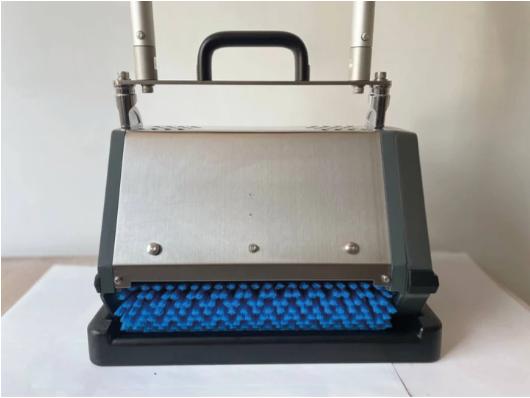
The TM3 12-inch is the guest-room machine: narrow enough for the gap between bed and dresser, light enough to carry between floors.
CRB describes the method as using about 85 to 90 percent less water than traditional wet cleaning. Treat that as the manufacturer's comparison. The claim you can test yourself is simpler: clean a test room, walk it on a timer, and see whether it can be released that shift.
The Manta Ray onboard tank meters solution at the brushes, so the attendant is not walking ahead with a sprayer in a small room.
The bed: UV inspection, not a machine pass
A CRB is a floor machine. Do not run it on a mattress, a box spring, or upholstery. What it adds to the bed is a faster, cleaner floor around it.
For the bed itself, the step that fits a turnover is inspection. CRB's UV inspection flashlight makes many organic stains, such as urine and other body fluids, visible under UV light that are hard to see in room lighting. On each departure:
- Pull the sheets and protector, and sweep the light across the mattress top, the sides, and the box spring.
- Check the headboard and the carpet along the bed line at the same time.
- Route anything the light finds to your mattress procedure: protector change, the mattress maker's cleaning method, or replacement. The flashlight finds the problem. It does not clean it.
This turns the guest's photo into a housekeeping work order, found an hour before the guest arrives.
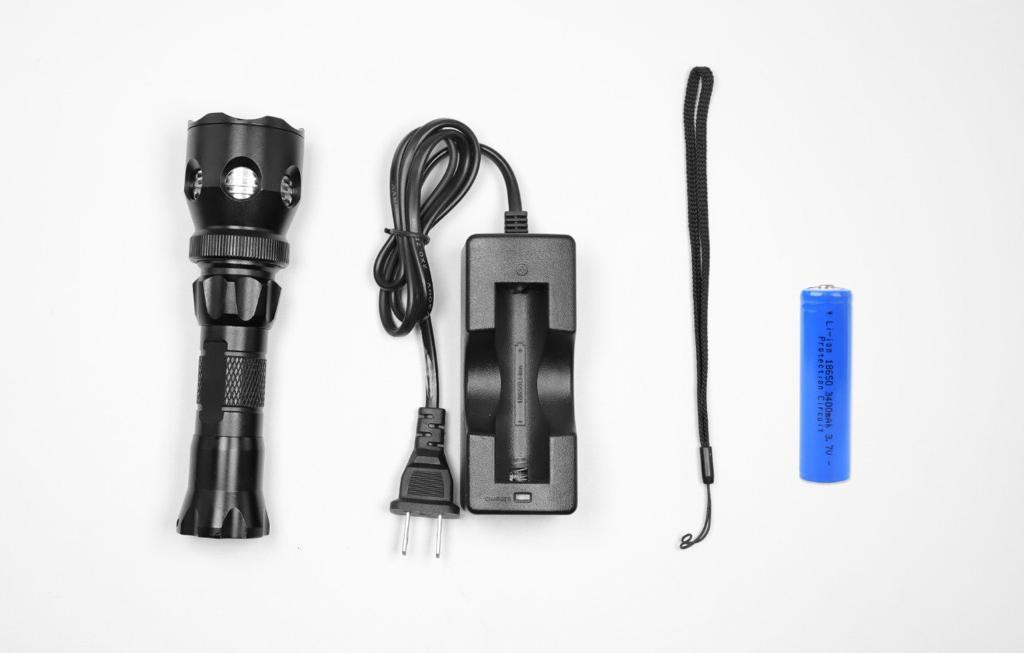
The CRB UV Light Inspection Kit: the flashlight, a rechargeable 18650 lithium battery, the charger, and a wrist strap. It ships with a carrying pocket and storage box. CRB states about 30 hours of use on a full charge. Keep one light on each housekeeping cart, and a charger in the linen room.
The full inspection routine, and what the light can and cannot tell you, is in UV inspection flashlight.
Before & after // process comparison
What happens under the carpet
A // Hot-water extraction
B // CRB low-moisture + pile lift
Diagram, not to scale. Water use per CRB: about 85–90% less than traditional wet cleaning.
Find your machine in 3 questions
Machine Selector
Find the right CRB machine in 3 questions
What kind of space do you clean most?
Pick the one that describes the majority of your route.
Operational ROI
Measure three things during a two-week trial on one floor.
- Minutes per room for the carpet pass, from strip to release, against your current method.
- Rooms held for damp carpet. Each one is a night of revenue at that rate.
- Pet-room odor complaints and repeat cleans, before and after UV spot detection is on the turnover card.
- Bed and carpet complaints per 1,000 occupied room nights, from the guest surveys and the front desk log, before and after the UV inspection step.
A worked check for the general manager: rooms no longer held, times the average daily rate, plus complaint compensation avoided, against the machine, chemistry, and flashlight cost. Use the trial numbers, not a projection.
What housekeeping should ask before buying
- What dry time do you get in your worst room, with the HVAC in its occupied setting?
- How loud is the machine next to an occupied room? The decibel figure is not in the current spec sheets. Ask CRB for it before scheduling daytime work.
- Who on each shift carries the UV flashlight, and what is the procedure when it finds something?
- Is your mattress protector program in place? Inspection works best when a stain means a protector change, not a new mattress.
Related reading
- Dry cleaning benefits for hotels
- Dry cleaning for carpets
- Commercial pet stains, odor and embedded hair
- UV inspection flashlight
Interactive configuration tools // size the system for this facility
Next step
Run the trial on your own floor
A CRB representative can demonstrate on your worst room or aisle, then price the machines, brushes, and chemistry for every site.