
02 // Surface Applications
Dry Cleaning for Carpets
A practical guide to dry carpet cleaning with a counter-rotating brush: vacuum, spot, encapsulate or compound, agitate, and vacuum again, matched to fiber and installation.
At a glance
- Dry time
- ~40 minwith CRB Dry Compound
- Moisture method
- Low-moisture encapsulation / dry compound
- Recommended brush
- Soft GrayStandard BlueStiff Green
- Ideal machine
- TM3 (12") / TM4 (15") / TM5 (20")
The 3-step process
- 1
Apply compound or encap pre-spray
A light, even application. No flooding, no soaked backing.
- 2
Counter-rotating cylindrical agitation
Two brushes turn against each other, lifting the pile and working chemistry in.
- 3
Lift soil & back in service
Vacuum the captured soil and reopen the space, often the same shift.
CRB vs. traditional wet extraction & rotary
| ✓ CRB low-moisture | Wet extraction / rotary | |
|---|---|---|
| Dry time | About 40 min or less with CRB dry compound | Soaked carpet can still be damp the next morning |
| Water in the floor | About 85–90% less water (CRB's comparison) | Floods the pile and backing |
| Wick-back & odor | Far less moisture left to wick back or sour | Moisture in the backing can wick, brown, or smell |
| Pile & surface | Cylindrical brushes lift and groom the pile | Rotary pads can distort pile; CRI 204 advises against rotary on carpet |
| Equipment | 40–62 lb, standard outlet, fits a closet or van | Truck access or portable extractor with hoses and tanks |
Keep a periodic hot-water extraction for heavy, oily, or salt-loaded soil. Dry time depends on humidity, airflow, and application rate.
Dry carpet cleaning is a scheduled way to keep pile looking even and traffic lanes lighter, using very little water. You vacuum the dry soil, treat spots, apply an encapsulating solution or an absorbent compound, work it in with a counter-rotating brush, and vacuum the soil back out.
It is the method to use between deep cleanings, and often the main method on carpet tile and in buildings that cannot close a floor overnight. The background on names and methods is in What is dry cleaning. This page is the working guide: sequence, chemistry, brush, machine width, and the point at which you should still bring in an extractor.
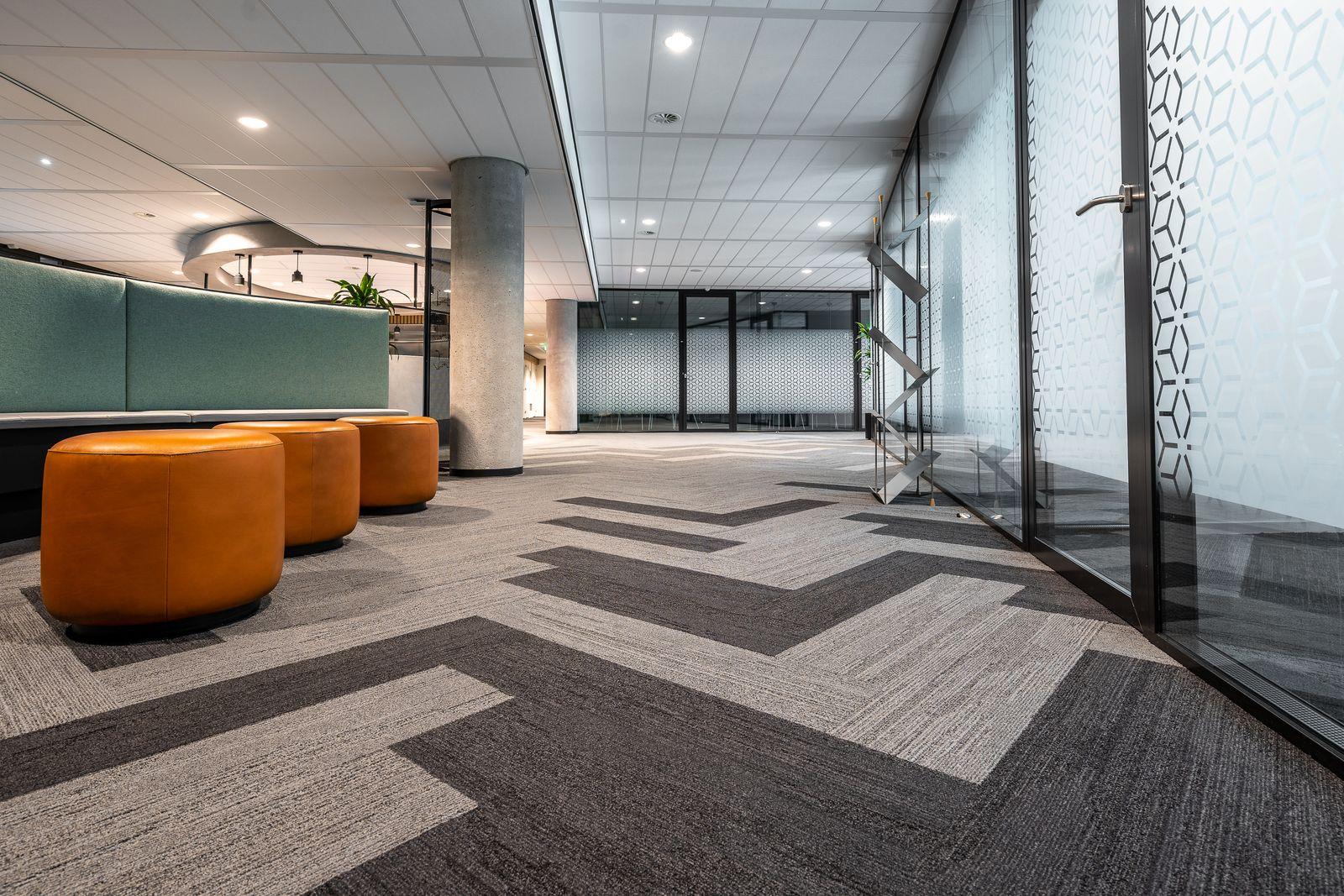
Patterned commercial carpet hides some soil and shows traffic in the lanes. Those lanes are where interim dry cleaning pays for itself. Photo: Mike van Schoonderwalt, Pexels.
Why agitation matters more when the carpet is only damp
A hot-water extraction rinses soil out with volume and suction. A low-moisture clean does not have that volume. Contact does the work. The brushes open the yarn, the detergent or compound meets the soil, and vacuuming removes what the chemistry has captured.
That is why a counter-rotating brush is specified in the Carpet and Rug Institute’s description of interim maintenance. CRI 204 defines that system as an encapsulating solution, a CRB, and a vacuum. The same standard describes the brush as cylindrical brushes that lift and agitate the pile. A rotary buffer with a pad is a different motion, and CRI does not recommend rotary machines for carpet cleaning.
CRB machines run at 380 RPM on the 15- and 20-inch models and 450 RPM on the 12-inch. Speed is not a substitute for passes. Overlap, and give traffic lanes extra passes. Worn bristles stop opening the pile long before the motor feels weak.
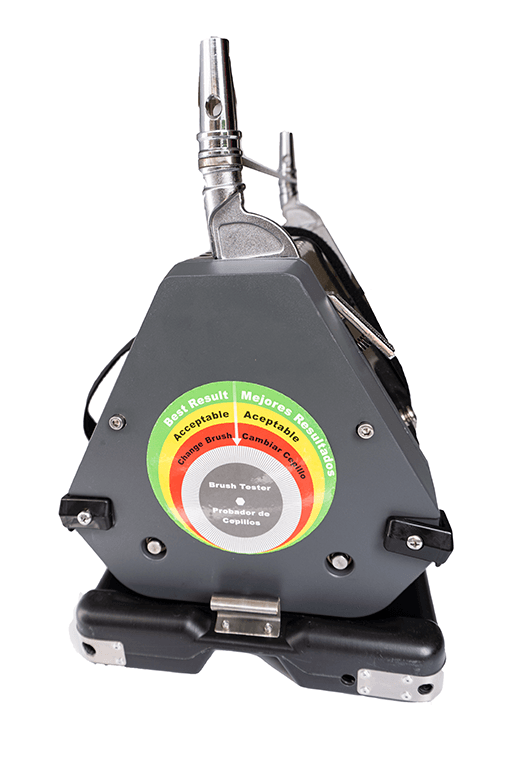
CRB housings carry a brush tester: green for best result, yellow for acceptable, red for change the brush. A worn brush leaves the chemistry sitting on top of the pile.
The sequence that actually cleans
Skip a step and the floor looks better for a week, then soils faster than before. Residue and leftover dry soil are the usual reasons.
1. Remove dry soil first
Vacuum slowly, with a vacuum that reaches the backing on commercial loop. Most carpet soil arrives dry, on shoes. If it is still in the pile when you add chemistry, you turn it into mud. Entries, pivots in front of doors, and the front of a desk get a second pass.
CRI’s maintenance guidance is blunt about frequency. High-traffic carpet is vacuumed often. Private offices can go longer. A CRB visit does not replace that rhythm. It builds on it.
2. Spot while the spill is still a spot
Set the spotter to the soil. CRB’s Ultra Pro line has a general spotter, a beverage spotter, and an enzyme spotter. The company states that the spotters meet EPA DfE criteria. Protein soils (milk, food, some pet stains) are the enzyme’s job. Sugary drinks are the beverage spotter’s job. Unknown spots start with the general spotter.
Apply it. Give it the dwell time on the label. Blot. Keep the spot damp, and keep the surrounding carpet from becoming a ring. A pump sprayer flooded “just to be sure” is how a small spill becomes a wick mark the next day.
Watch the product on CRB’s channel: Ultra Pro spotter.
3. Apply the cleaning chemistry evenly
For routine appearance cleaning, use Ultra Pro peroxide encapsulation. CRB states that it is CRI certified, peroxide based, low moisture, and free of sticky residue, with a floral or lavender scent. The concentrate’s SDS lists a pH around 4 to 5. As sold, it is a skin and eye irritant. Gloves and eye protection belong on the person mixing the jug. The SDS is published here.
CRB’s published low-moisture dilutions are:
- Medium soil: 6–10 oz per gallon of water
- Heavy soil: 10–14 oz per gallon
- Extreme soil: 14–20 oz per gallon
The label on the current jug overrides this list if they differ. The same guide also lists pre-spray rates for use before extraction (about 4–6 oz per gallon for medium soil, 10–12 oz for heavy), a spot rate, and a 2 oz per gallon rate as a rinse aid when an older cleaning left the carpet sticky. Shelf life is listed at about six months.
Apply a film, not a soak. Overlap the spray so lanes and edges match. On a Manta Ray machine the solution feeds from a 2-gallon tank as foam or liquid through the housing, which keeps the application matched to the brush path. The 2026 brochure describes that system as available for new or existing CRB machines. Confirm it is on the unit you are buying. Video: Meet the CRB Manta Ray.
For dark traffic lanes, CRB recommends the organic dry compound together with the encapsulator. The compound is an absorbent particle. CRB describes it as organic material from recycled sources, DfE compliant, citrus scented, yellowish until it loads soil and darkens, suitable for carpet and hard floors, with a stated dry time of about 40 minutes or less. Spread it evenly. Piles of compound in the lane and bare fiber beside it clean unevenly.
4. Brush with the CRB
Walk at a pace that lets the brushes comb the yarn. Overlap each pass by a few inches. Turn the machine with the brushes raised or moving, so you do not grind one spot. Edges and chair legs need a slower pass. Under desks, the 12-inch machine fits where a 20-inch deck only reaches the aisle.
On a carpet that has been crushed, the pile should look more open after the pass. If it looks smeared, the brush is too stiff, the carpet is too wet, or the brush is worn.
5. Vacuum the captured soil
Encapsulation has to dry into crystals before vacuuming removes them well. In a hotel or office, that vacuum is often the next housekeeping or night-crew pass, once the floor is dry to the touch. Leave the crystals in place and they eventually break up under traffic, which is a weaker result than a real vacuum.
Compound is vacuumed out after it has taken up soil. Follow the timing you can document on that carpet. CRB’s stated dry time for the compound is about 40 minutes or less. Humidity and airflow move that number. Tell the customer when the follow-up vacuum will happen, and do it.
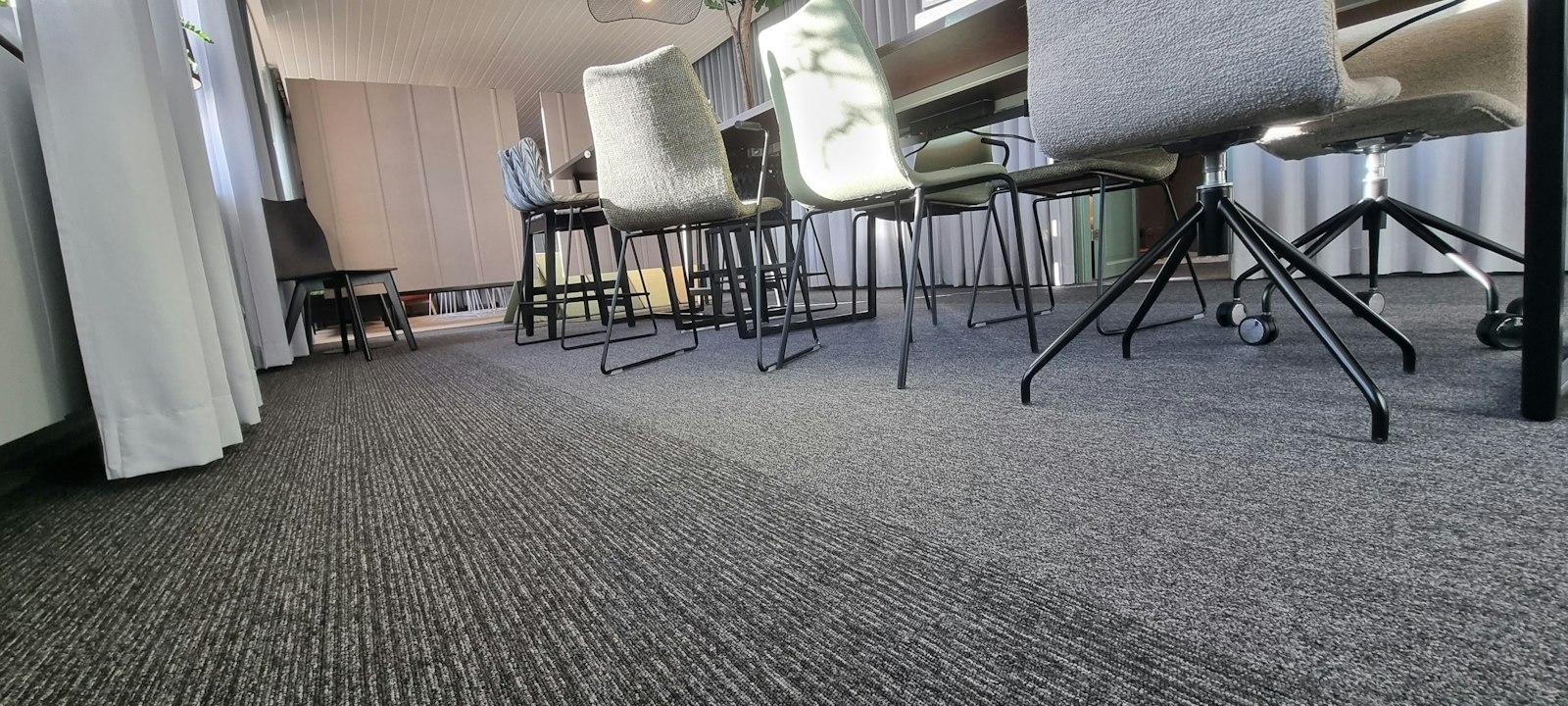
Chair casters grind soil into the face yarn. Those paths need vacuuming and, on a schedule, a CRB pass. Photo: IMEX Flooring Sweden, Unsplash.
Match the brush to the carpet
The machine ships with a standard brush because one brush covers the widest range of work. The second set is how you stop damaging the exceptions.
| Brush | Use it on | Leave it off |
|---|---|---|
| White, extra soft | Delicate natural fibers, oriental rugs | Rough tile, matted commercial loop |
| Gray, soft | Residential cut pile, commercial wool loop, many hotel carpets | Grout, concrete |
| Blue, standard | Commercial level loop, low cut pile, needle felt, lighter tile work | Wool that still fuzzes, very soft rugs |
| Green, stiff | Synthetic commercial loop that can take it, tile and grout, rough hard floors | Plush, wool, oriental rugs |
| Yellow, extra stiff | Unsealed concrete, outdoor patios, and a one-time restorative pass on severely matted commercial low loop, after the mill approves | Routine indoor carpet cleaning of any kind |
CRB’s own note on hotel wool is worth keeping on the work order. A wool carpet that has never been dry cleaned can throw fuzz and pills on the first pass. Use the gray brush. Test in a closet. Show the customer the test before you do the corridor.
Yellow is a concrete, patio, and restoration tool. On carpet it is not for regular use, and the carpet manufacturer should approve the one restorative pass. A yellow brush used every month on a textured loop will fuzz the tips.
Product pages for the 20-inch brush set have conflicting color names. Until CRB confirms a single chart, order by the written description (soft wool, standard loop, stiff tile) and check the bristles when the box arrives. Installation is shown here: How to install the brushes.
Find your brush in 2 questions
Step 1 of 2
Match the machine to the floor plan
| Floor | Machine |
|---|---|
| Stairs, guest rooms, cubicles, small shops | TM3 12-inch, about 40 lb, 500 W, 450 RPM |
| Homes, small offices, mixed routes | TM4 15-inch, about 56 lb, 750 W, 380 RPM |
| Open corridors, showrooms, ballrooms | TM5 20-inch, about 62 lb, 750 W, 380 RPM |
| Large unobstructed halls | Tandem pair of 15-inch or 20-inch machines |
All models are listed at 110/220 V and about 42.5 inches tall. The 15-inch is the width CRB calls the usual starting point for a cleaning business. A company that only does hotels may want the 12-inch for rooms and a 20-inch for corridors on day one. Buying only the widest machine feels productive until the first guest-room bay.
See the widths moving: TM3 and TM4 15-inch. Assembly, if the machine arrives in the carton: seven-step assembly.
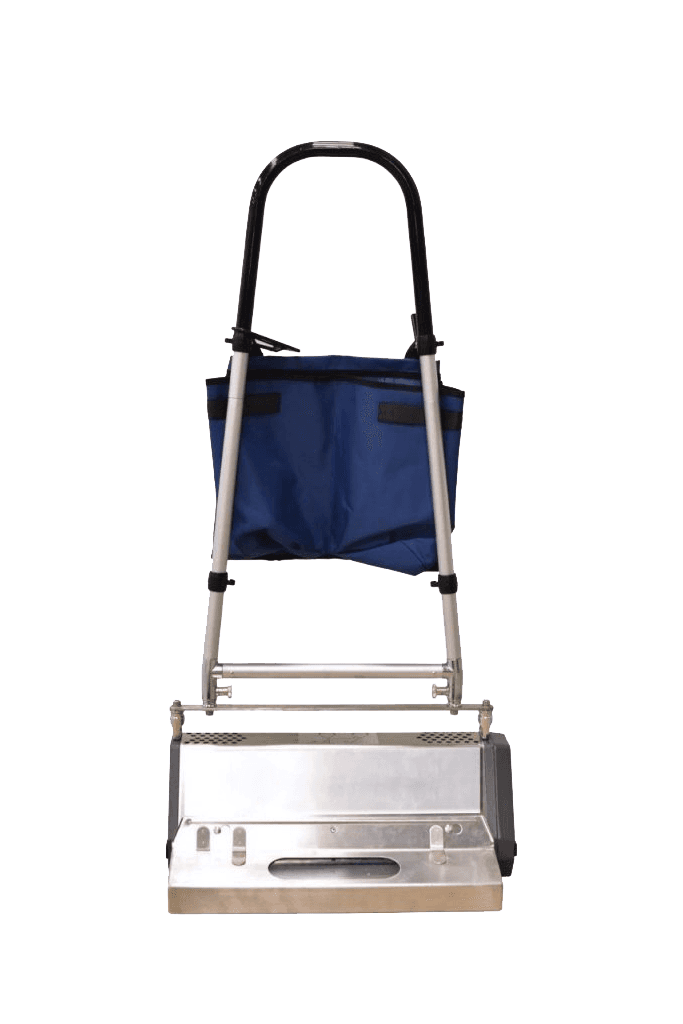
The 20-inch machine covers open commercial carpet faster. Obstructed rooms are quicker with a 12- or 15-inch deck.
Find your machine in 3 questions
Machine Selector
Find the right CRB machine in 3 questions
What kind of space do you clean most?
Pick the one that describes the majority of your route.
Installation and fiber change the rules
Carpet tile and direct glue-down. There is little or no cushion to hide water. Solution that reaches the seam can soften adhesive, lift an edge, or leave a curl. Encapsulation and compound are the interim methods that respect that construction. Keep application even and light along seams. If a tile corner is already loose, fix the adhesive before you clean, or you will flick the corner with the brush.
Stretch-in carpet over cushion. Common in hotel rooms and some offices. The risk of extraction is a wet cushion that stays wet, then smells. Low-moisture work avoids that on the monthly clean. If a room already smells, find out whether the cushion is wet before you encapsulate over it. Encapsulation will not dry a saturated pad.
Wool and wool blends. Prefer the gray brush, a test area, and the milder dilution. Acidity near pH 4 to 5 is in a range wool generally tolerates better than high-alkaline detergents. Peroxide can still shift some dyes. Test.
Olefin and solution-dyed nylon. These are the workhorses of commercial corridors. Blue brush, encapsulation, extra passes on lanes. Oily soil on olefin can need a solvent-compatible spotter and, periodically, extraction. If lanes re-soil in days, the carpet is holding residue or oil, and another encapsulating pass will not be the fix.
Cut pile and plush. Soft brush, fewer aggressive passes. The goal is to clean and leave the yarn standing, not to carve a path.
Patterned corridor carpet. Soil shows in the traffic path even when the pattern is busy. Clean the full width, not only the dark streak, or the clean streak becomes the new eyesore.
What to tell the customer about dry time and results
Give a range you can stand behind on that day. Compound, in CRB’s description, is about 40 minutes or less. Encapsulation is in the same short-dry family. Airflow, humidity, and a heavy hand on the sprayer move the result. A closed guest room with the HVAC off will dry slower than a corridor with air moving.
Walk the customer across a test lane when it is dry to the touch. Good interim work looks even, feels free of grit, and does not smell of wet carpet the next morning. It will not turn a ten-year lane into a new carpet. If someone was promised that, the promise was wrong, and an extraction or a replacement conversation is the honest next step.
Wicking, browning, and a sour smell after a previous “steam clean” are often moisture left in the backing. Switching the maintenance program to low moisture stops adding to that problem. It does not, by itself, dry a cushion that is already wet.
When a cleaning company should buy the system
Buy a CRB system when you want commercial work you can finish inside the customer’s hours. The machine, a sprayer or a Manta Ray tank, a vacuum you already own, and the Ultra Pro chemistry fit a car or a van. There is no water-access negotiation and no hose through a lobby.
The repeat sale is the chemistry and the brushes. Brushes wear. Concentrates get used up. A route of offices and hotels on a monthly or quarterly interim schedule consumes encapsulator and compound on a predictable rhythm. That is a better business than a machine that sits until someone calls for an annual steam clean.
The first purchase for a mixed route is usually the TM4 15-inch, a blue brush as the spare, a gray brush if you have wool or residential cut pile, and a case of encapsulator plus the spotters you will actually use. Add compound when the work includes dark lanes that have to be dry quickly. Add a 12-inch when stairs show up every week.
Hold the purchase, or buy an extractor as well, when the carpets you are being asked to “save” are beyond interim cleaning. You can still sell the CRB as the maintenance machine after the restorative clean. Selling only encapsulation on a carpet that needs a reset produces a disappointed customer and a machine with a bad reputation.
A maintenance rhythm you can put on a proposal
Adjust the weeks to the soil you see. This is a working pattern, not a CRB laboratory spec.
- Every day, or every other day in open offices: vacuum entries, corridors, and pivot points.
- The same day as the spill: spot with the matching Ultra Pro spotter.
- Monthly, or quarterly in light-use rooms: encapsulate and CRB the traffic lanes and the full room on an alternating plan. Use compound on lanes that shadow.
- One to four times a year, depending on climate and soil: hot-water extraction of entries and the worst lanes, more often where salt and oil come inside.
Write the rhythm into the contract. Interim cleaning sold as “whenever it looks bad” becomes a complaint call. Interim cleaning sold as a calendar becomes a route.
Related reading
- What is dry cleaning
- Dry cleaning for tiles
- Benefits for hotels
- Benefits for offices
- Machines
- Chemicals
- Brushes
FAQ
Can I dry clean a carpet tile the same way as broadloom?
Use the same chemistry and a lighter hand at the seams. Carpet tile and glue-down broadloom are poor places to leave water. Encapsulation and compound are the interim methods that fit that construction.
How soon can people walk on it?
When it is dry to the touch, which with compound CRB describes as about 40 minutes or less under the conditions they state. Damp shoes on a film that has not crystallized will track it. Vacuum after it dries.
Will this void a carpet warranty?
Many mills expect CRI Seal of Approval products and methods for claims. CRB states that the peroxide encapsulator is CRI certified. Confirm the current listing and the mill’s care sheet, and keep both on file. A yellow brush used without asking the mill is the kind of choice that causes a warranty argument.
Do I still need a vacuum if the CRB brushes the carpet?
Yes. The brush loosens and captures soil. The vacuum removes it. Dry vacuuming before the chemistry, and vacuuming crystals or compound afterward, are both part of the clean.
What if the carpet smells worse the day after?
Stop and find moisture. Check the cushion or the adhesive, look for a previous overwetting, and check whether a spill reached the backing. Another coat of encapsulator on top of a wet pad will not fix the odor.
Talk with CRB
If you want a width, a brush set, and a chemical kit matched to the carpets you actually clean, call 1-800-704-0527 or email info@crbclean.com. Machine specs are on the machines page.
Interactive configuration tools // apply this guide to your floor