
03 // Industry Use Cases
Dry Cleaning Benefits for Offices
Offices use low-moisture CRB cleaning to keep carpet tile presentable overnight, limit water at the adhesive, and cover workstations and open floors with one system.
At a glance
- Dry time
- ~40 minwith CRB Dry Compound
- Moisture method
- Low-moisture encapsulation / dry compound
- Recommended brush
- Standard BlueStiff Green
- Ideal machine
- TM3 (12") cubicles · TM4 (15") / TM5 (20") open floors
The 3-step process
- 1
Apply compound or encap pre-spray
A light, even application. No flooding, no soaked backing.
- 2
Counter-rotating cylindrical agitation
Two brushes turn against each other, lifting the pile and working chemistry in.
- 3
Lift soil & back in service
Vacuum the captured soil and reopen the space, often the same shift.
CRB vs. traditional wet extraction & rotary
| ✓ CRB low-moisture | Wet extraction / rotary | |
|---|---|---|
| Dry time | About 40 min or less with CRB dry compound | Soaked carpet can still be damp the next morning |
| Water in the floor | About 85–90% less water (CRB's comparison) | Floods the pile and backing |
| Wick-back & odor | Far less moisture left to wick back or sour | Moisture in the backing can wick, brown, or smell |
| Pile & surface | Cylindrical brushes lift and groom the pile | Rotary pads can distort pile; CRI 204 advises against rotary on carpet |
| Equipment | 40–62 lb, standard outlet, fits a closet or van | Truck access or portable extractor with hoses and tanks |
Keep a periodic hot-water extraction for heavy, oily, or salt-loaded soil. Dry time depends on humidity, airflow, and application rate.
Offices benefit from dry carpet cleaning because the building is only empty for a few hours, and most of the floor is carpet tile that should not be soaked. A counter-rotating brush (CRB) with an encapsulator or a dry compound refreshes traffic lanes and workstations, dries quickly, and leaves the adhesive line alone.
The method itself is in What is dry cleaning. The pass-by-pass carpet guide is in Dry cleaning for carpets. This page is for facilities managers and the janitorial contractors who bid their buildings.
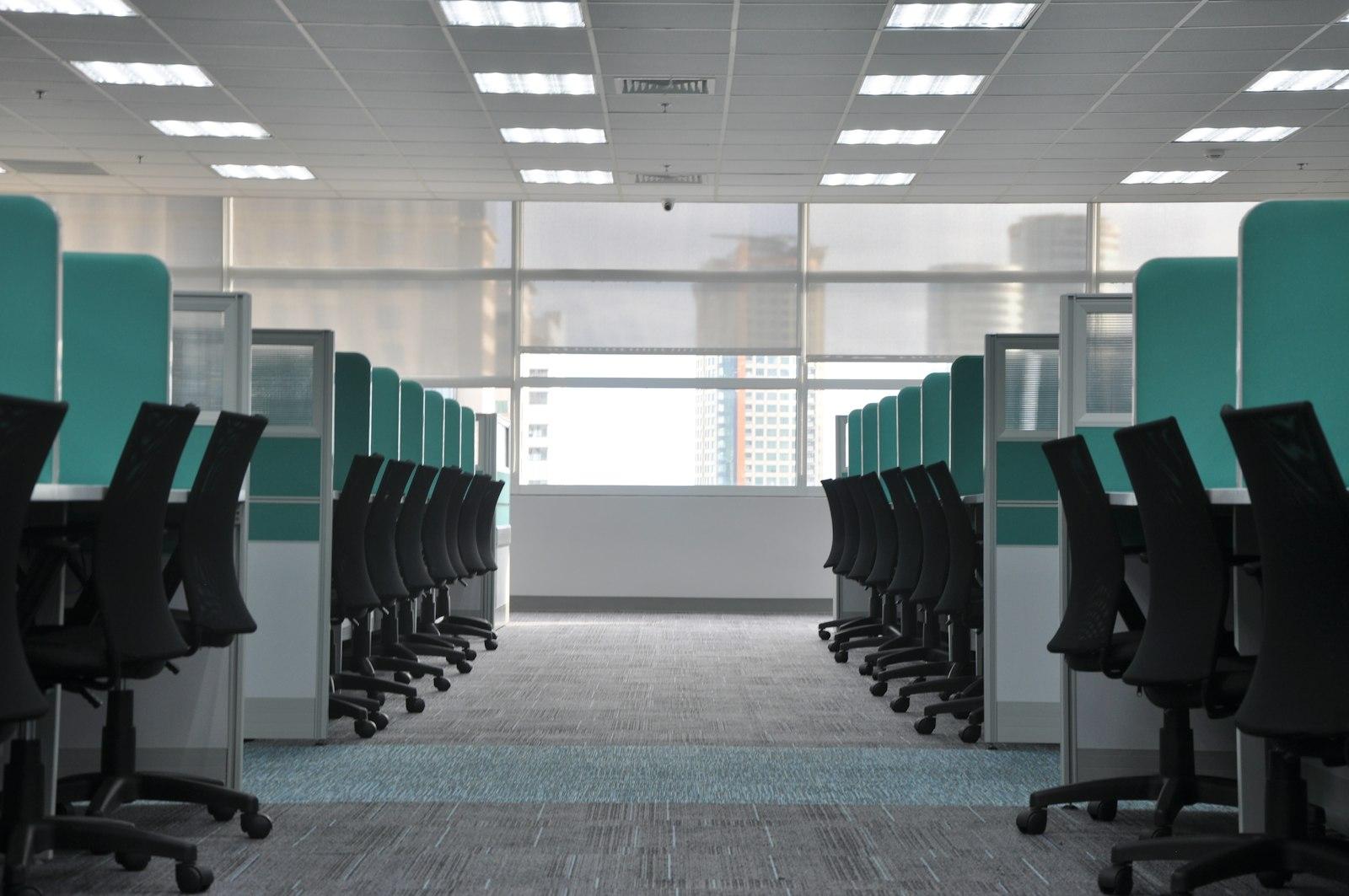
Chair casters and aisle pivots are the soil pattern in an office. A night crew has to clean them and be gone before the first meeting. Photo: kate.sade, Unsplash.
Why the usual deep clean fights the building
Commercial offices are mostly modular carpet tile, direct-glue broadloom, or both. There is no thick cushion to hide a mistake. Water that reaches a seam can soften adhesive, lift a corner, or leave a curl that catches a chair wheel the next morning. Facilities people see that curl and blame “the carpet cleaners,” correctly.
The other constraint is the clock. A crew that starts at 7 p.m. and must be off the floor before the first arrival cannot leave a wing damp. Hot-water extraction done carefully, with airflow and a light spray, can meet that deadline on a small area. Done as a flood-and-go on a Friday, it produces a Monday of damp smells, wrinkled tile, and a facilities manager who will not approve the vendor again.
Encapsulation and compound cleaning are built for this window. CRI 204 defines interim maintenance as an encapsulating solution, a counter-rotating brush, and a vacuum. The purpose is appearance between deep cleanings. That is exactly an office program: keep the floor acceptable all year, and deep-clean entries and the worst lanes on a longer cycle.
CRB states that the equipment uses about 85 to 90 percent less water than traditional wet cleaning. The number that belongs in your own specification is the one you time in the building: how long until the test bay is dry to the touch with the night HVAC schedule you actually run. CRB describes the organic compound as dry in about 40 minutes or less. Use a bay with normal airflow, not a storage room with the diffuser closed.
What the facilities team gains
The floor is ready for the workday. A section cleaned at the start of the shift can be walked at the end of it. You are not taping off a corridor that people will cross anyway.
Carpet tile stays flat. Light, even application along seams is the whole technique. The brush agitates the face yarn. It does not need to saturate the backing. Loose corners should be glued before cleaning, or the brush will lift them further.
One method from the lobby to the workstation. Open collaboration space takes a 20-inch machine. Cubicle aisles take a 12- or 15-inch. The chemistry stays the same, so the night lead is not running two unrelated processes. Tile lobbies and restroom approaches use a brush change and a hard-floor product, covered in Dry cleaning for tiles.
Less re-soiling from leftover detergent. Encapsulation is designed to dry to a crystal that vacuuming removes. A sticky residue from a poorly rinsed extraction, or from too much shampoo, is what grabs the next week’s dirt. CRB states that Ultra Pro encapsulation leaves no sticky residue and is CRI certified. If a floor was left sticky by someone else, CRB’s guide lists a light 2 oz per gallon use of the encapsulator as a rinse aid in an extractor. That is a correction step, not the weekly method.
A specification a sustainability committee can read. The real points are modest and checkable: much less water than extraction, a peroxide encapsulator the manufacturer states is CRI certified, and a compound and spotters the manufacturer states meet EPA DfE criteria. That is legitimate green-cleaning language. It is not a LEED point by itself, and it should not be written as one. Attach the SDS and the product names to the bid.
A contractor who can work without a truck. The machine plugs into 110/220 V. Listed draw is 500 W on the 12-inch and 750 W on the larger machines. No dock appointment, no water fill on a secure floor, no wastewater leaving the freight elevator. For a multi-tenant tower, that is often the difference between “approved vendor” and “not this month.”
Soil in an office is predictable
Office soil is not a mystery, which is why a calendar works.
- Entries and elevator lobbies take street soil, grit, and, in winter climates, salt. Vacuum them every day. Encapsulate them on the shortest cycle in the building. Plan a real extraction a few times a year, because salt and oil are what interim cleaning eventually cannot hold.
- Aisles and the front of workstations take caster abrasion and pivot wear. The carpet in the photo above fails here first, even when the desk wells still look new.
- Conference rooms take spills. Coffee and catering are the enzyme and beverage spotters. A cart with those two bottles, used the same day, prevents most permanent spots. Video: Ultra Pro spotter.
- Under desks stays cleaner than the aisle and still needs a slow pass so the edge of the clean aisle does not show. The 12-inch machine is the one that actually fits.
- Pantries and the tile in front of them need the hard-floor setup, not more carpet polymer. LVT in new pantries is an ECO Luster job, not a green-brush grout job.
Mats at the doors still do more per dollar than any machine. A CRB program on a building with no entry mats is a program that fights grit all year.
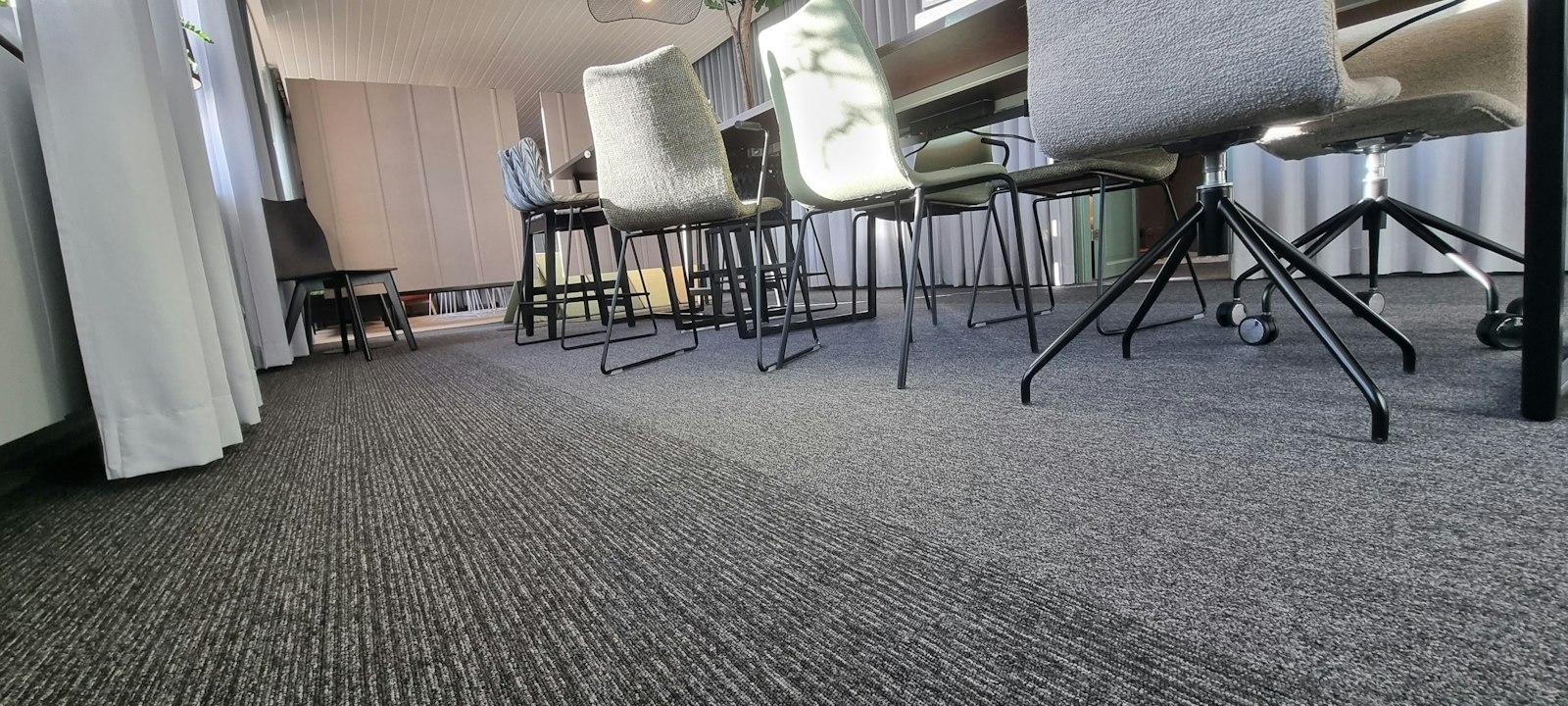
Low, dense commercial carpet is the usual office face yarn. Encapsulation plus a CRB is the interim method CRI describes for keeping it presentable. Photo: IMEX Flooring Sweden, Unsplash.
A program you can paste into a scope of work
Adjust the weeks to headcount and to whether people eat at their desks. This is a working pattern for a typical leased office, not a laboratory rate from CRB.
| Task | Timing | Notes |
|---|---|---|
| Vacuum entries, lobbies, main aisles | Every business day | Slow passes. This removes the grit that cuts yarn. |
| Vacuum workstations and conference rooms | Several times a week | CRI’s own guidance allows less frequent vacuuming in private offices than in public lanes. |
| Spot spills | The same day | Beverage, enzyme, or general Ultra Pro spotter. |
| Encapsulate and CRB the lanes and lobbies | Monthly | Medium-soil dilution, CRB’s published 6–10 oz per gallon, unless the label differs. |
| Full-floor interim clean, including under desks | Quarterly | 12- or 15-inch in the furniture, 20-inch in open areas. |
| Compound on lanes that shadow | As needed | CRB states about 40 minutes or less to dry. |
| Hot-water extraction of entries and failed lanes | One to four times a year | More often in salt climates and at food-heavy floors. |
Put the follow-up vacuum on the same scope. Encapsulation crystals that are never vacuumed are left in the carpet for foot traffic to grind up. The night crew can vacuum them on the next pass once the floor is dry. Say so in the spec, or it will be skipped.
Machine width is a furniture problem
| Space | Machine |
|---|---|
| Cubicles, private offices, under conference tables | TM3 12-inch, about 40 lb, 500 W, 450 RPM |
| Mixed floors, small suites, the usual contractor machine | TM4 15-inch, about 56 lb, 750 W, 380 RPM |
| Open offices, long corridors, trading floors | TM5 20-inch, about 62 lb, 750 W, 380 RPM |
| Empty floors during a weekend reset | Tandem 15- or 20-inch |
The 15-inch is the machine CRB describes as the common starting point. A contractor with a book of occupied suites often adds the 12-inch because furniture, not square footage, sets the pace. A headquarters with a clear floor plate gets more from the 20-inch.
The Manta Ray puts a 2-gallon tank on the machine and feeds foam or liquid as you walk, which keeps a night crew from overspraying the seam between two carpet tiles. The 2026 brochure lists it for new or existing machines. Confirm the tank is on the quote. Video: Manta Ray. Width videos: TM3, TM4.
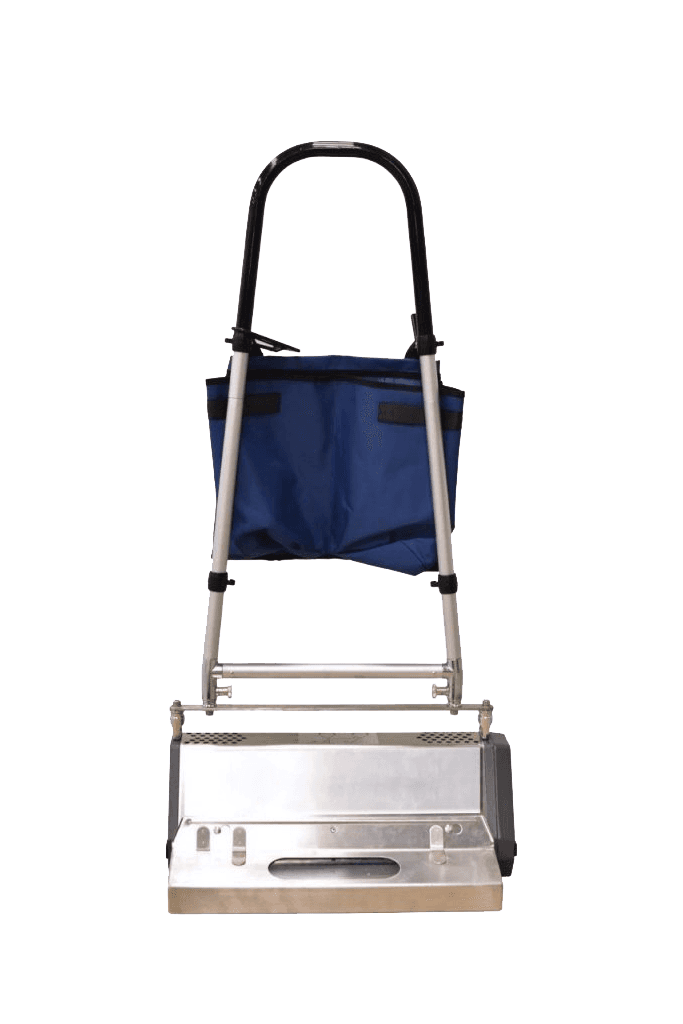
The 20-inch deck belongs on open office floors. Between panels, a 12- or 15-inch machine finishes the job the wider deck cannot reach.
Find your machine in 3 questions
Machine Selector
Find the right CRB machine in 3 questions
What kind of space do you clean most?
Pick the one that describes the majority of your route.
What to require of a janitorial bid
If you are the facilities manager, write the method into the bid so “dry cleaning” cannot mean a rotary and a cotton pad. CRI does not recommend rotary equipment for carpet cleaning. A counter-rotating brush is the agitator named in the interim-maintenance definition.
Ask for:
- Machine width, and a plan for obstructed areas.
- The encapsulator product name, and the claim that it is CRI certified, on the manufacturer’s current documentation.
- Dilution and who is allowed to mix concentrate. The Ultra Pro concentrate is a skin and eye irritant as sold.
- Brush color by area. Blue for standard commercial loop. Gray if you still have wool in a boardroom. Green stays on tile.
- Dry time they will guarantee in your HVAC conditions, after a paid test bay.
- The extraction plan for entries, so interim cleaning is not asked to do a job it will lose.
- SDS sheets attached to the bid.
If you are the contractor, this list is also your sales script. Owners who have been burned by wet tile corners will pay for a vendor who talks about seams, dilutions, and a test bay. Bring a 12- or 15-inch machine, clean one aisle after hours, and come back in the morning with the facilities manager. That demonstration sells more machines and more monthly accounts than a catalog.
When the office should still extract, or replace
Extract when lanes are dark a week after a correct interim clean, when winter salt is crusted at the doors, or when a pantry approach is oily. Extract when you are turning a floor back to a landlord and the scope calls for a restorative clean.
Replace, or re-tile, when the face yarn is worn through at the casters. No chemistry paints yarn back on. A CRB will make the rest of the floor look better, which can make the worn path look worse by comparison. Say that before the pilot, not after.
Skip the system only if the building is about to be recarpeted and you need a single handover clean. Rent or subcontract an extraction and spend the capital on the new floor’s maintenance kit instead.
A first order that matches an office route
For an in-house crew or a contractor opening office work:
- TM4 15-inch, plus a TM3 if the furniture is dense.
- Spare blue brushes, and a green pair only if restroom and lobby tile are in the contract.
- Ultra Pro encapsulation concentrate in the case size you will use inside six months.
- Organic compound for lanes.
- Beverage and enzyme spotters.
- ECO Luster if the fit-out includes LVT.
Machine, brush, and chemical pages: machines, brushes, chemicals.
Train the night lead on assembly and brush changes before the first solo shift. A worn brush is the quiet failure mode. The housing has a tester: green is the best range, yellow is acceptable, red means change the brush.
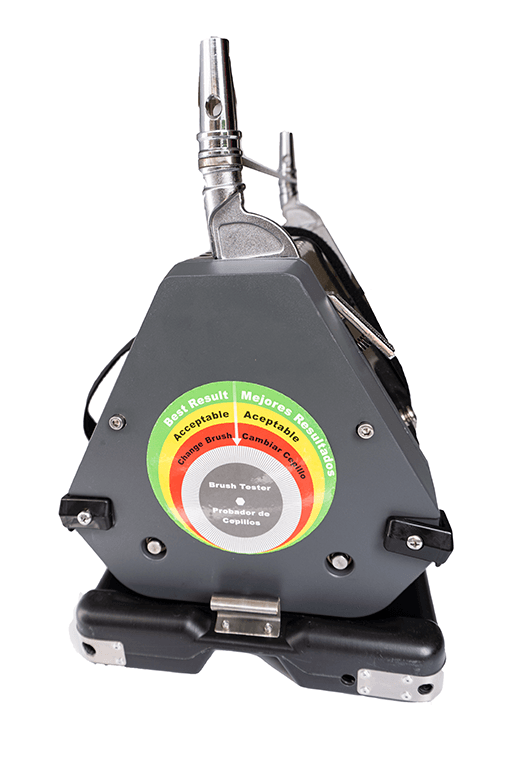
Check the brush before the shift. A red reading means the bristles are no longer opening the pile, and the chemistry is being wiped across the surface.
Find your brush in 2 questions
Step 1 of 2
Related reading
- What is dry cleaning
- Dry cleaning for carpets
- Dry cleaning for tiles
- Benefits for hotels
- YouTube channel
FAQ
Is encapsulation safe on carpet tile?
It is the interim method that fits carpet tile, because the application stays light and dries quickly. Keep seams from being flooded. Fix loose tiles before you brush them.
How often should an office be dry cleaned?
Lobbies and main aisles often monthly, full floors quarterly, entries extracted a few times a year. High-traffic headquarters and buildings with food at the desk need the short end of that range. A quiet professional suite can go longer.
Can the day porter run a machine?
A day porter can spot-clean with the bottled spotters and can run a small machine in an empty conference room. Full-floor CRB work belongs after hours, both for cord safety and so chairs can be moved. Mixing concentrate is a supervised task.
Will this remove coffee stains by itself?
Fresh coffee is a spotter job, done the same day, then the area is included in the next CRB pass. A stain that has been walked on for months may lighten and may not disappear. Say so when you see it.
What is the first machine for a janitorial company adding this service?
The TM4 15-inch, a spare blue brush, encapsulation, and spotters. Add the 12-inch when the accounts are furniture-heavy, and the 20-inch when they are open plan.
Talk with CRB
Send the square footage, whether the floor is carpet tile or broadloom, and whether you clean in-house or as a contractor. Call 1-800-704-0527 or email info@crbclean.com.
Interactive configuration tools // size the system for this facility
Next step
Run the trial on your own floor
A CRB representative can demonstrate on your worst room or aisle, then price the machines, brushes, and chemistry for every site.